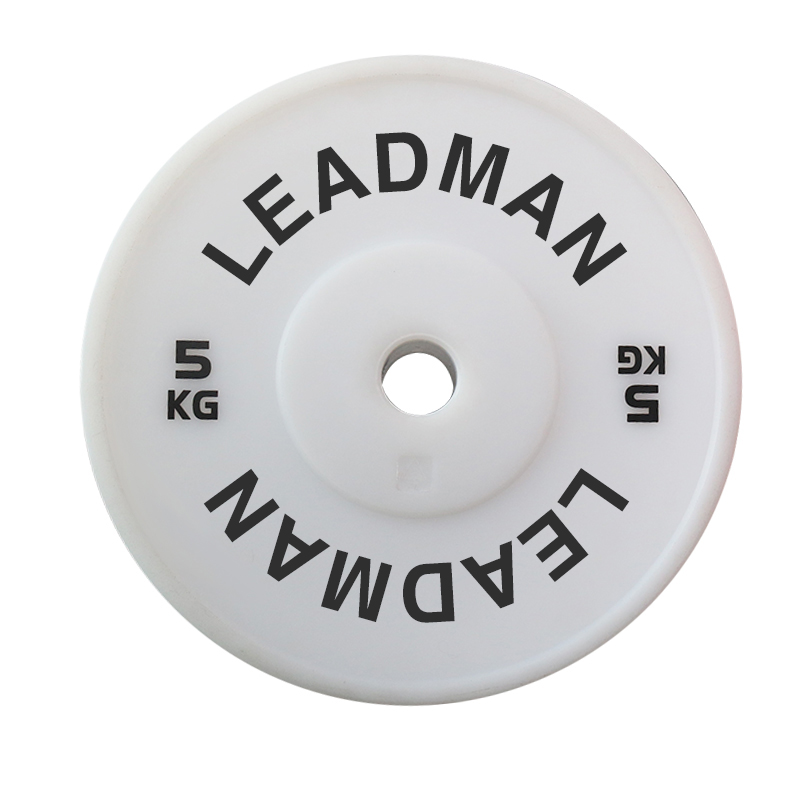
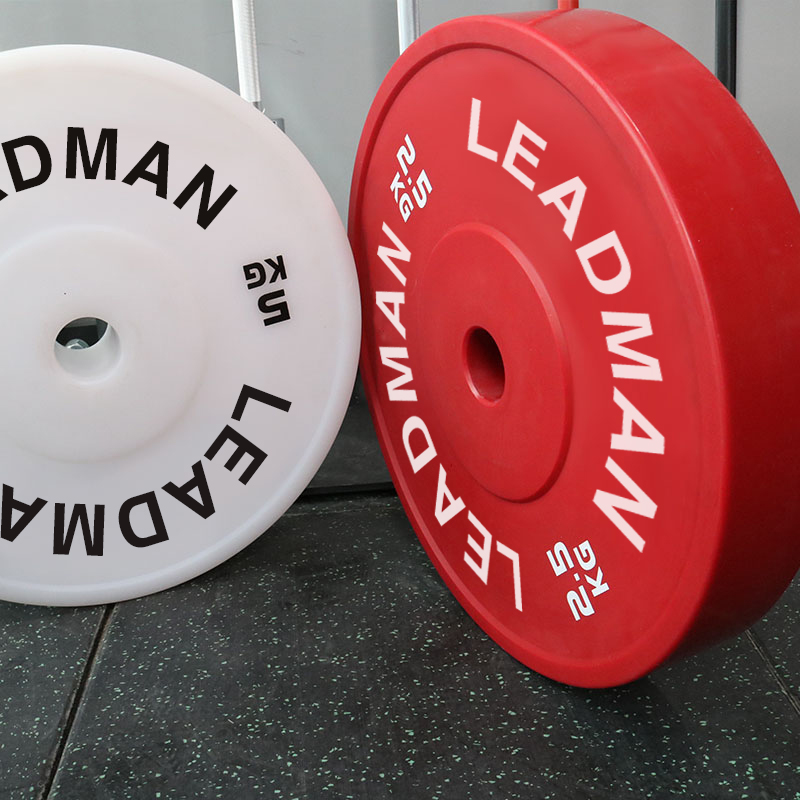
In Olympic weightlifting, learning the snatch and clean and jerk requires thousands of repetitions—but dropping iron plates repeatedly damages floors and bars. PE technique plates solve this problem by providing the exact diameter and center hole specification of competition bumper plates at a fraction of the weight. The 450mm outside diameter matches IWF competition standards, ensuring that the barbell sits at the correct height for pulls, drops, and resets. When you add a full set of technique plates (1.25kg, 2.5kg, 5kg), the barbell stands at the same height as if loaded with 20kg competition plates, allowing beginners to practice the full range of motion without the intimidation or risk of heavy loads.
From a coaching perspective, PE technique plates accelerate learning curves. A novice lifter attempting a snatch with 20kg plates might struggle with balance and wrist stability; with 5kg PE plates on each side, the barbell weighs only 30kg total (20kg bar + 10kg plates), light enough to focus on footwork and bar path without fear of injury. The PE material (polyethylene) is softer than rubber or urethane, meaning dropped plates bounce less and make less noise—ideal for technique-focused sessions in shared gym spaces or early morning training.
The 450mm outside diameter is non-negotiable for proper Olympic lifting technique. Competition bumper plates from 10kg to 25kg all share this 450mm diameter, so the barbell's height off the floor remains constant regardless of the plate combination. Technique plates that follow this same diameter allow lifters to practice the first pull from the floor, the scoop position, and the drop under the bar with authentic spatial awareness. If technique plates had a smaller diameter (e.g., 400mm), the barbell would sit lower, changing the hip and knee angles at the start position—teaching bad habits that would need to be unlearned when switching to full-weight plates.
The 50.6±0.2mm center hole is equally critical. Olympic barbell sleeves measure 50mm with a tolerance of +0/-0.1mm. A center hole of 50.6mm provides 0.3-0.6mm of clearance, allowing the plate to slide freely onto the sleeve without binding while preventing excessive wobble. PE technique plates with this precise hole size will fit both IWF-certified barbells (50mm sleeves) and cheaper 49.5mm commercial bars. The inner Ory: 2 notation on the label likely refers to a two-stage inner ring design (steel or brass insert) that prevents the PE material from deforming around the barbell sleeve over time—a common failure mode on all-PE plates after hundreds of drop repetitions.
The three weight options have distinct thicknesses corresponding to their mass, while maintaining the same 450mm diameter:
The LEADMAN THICKNESS specification: 8.3-10.5CM (83-105mm) listed on the product label likely refers to the total stack thickness when multiple plates are combined, not a single plate. For example, one 5kg plate (100mm) plus one 2.5kg plate (82mm) stacked together would measure 182mm total thickness. The thickness of the paper: 5mm note indicates the packaging insert or instruction sheet thickness, not relevant to plate dimensions.
| Weight | Outside Diameter | Thickness (approx.) | Center Hole Diameter | Typical Application |
|---|---|---|---|---|
| 1.25 kg | 450 mm | 70 mm | 50.6 ±0.2 mm | Micro-loading, technique refinement |
| 2.5 kg | 450 mm | 82 mm | 50.6 ±0.2 mm | Women's / youth technique training |
| 5 kg | 450 mm | 100 mm | 50.6 ±0.2 mm | Standard technique work, CrossFit beginner classes |
PE (Polyethylene) is a semi-crystalline thermoplastic with specific properties that make it suitable for technique plates but not for heavy dropping. Density ranges from 0.93 to 0.97 g/cm³, making PE plates noticeably lighter than rubber (1.1-1.2 g/cm³) or urethane (1.2-1.25 g/cm³). This low density is why a 5kg PE plate needs to be 100mm thick—the same weight in rubber would be approximately 35mm thick. The advantages of PE for technique plates include:
Limitations: PE plates are not suitable for dropping from overhead (e.g., snatch drops) because the material can crack after repeated impacts. They are designed for controlled technique work, not high-impact CrossFit WODs. For heavy dropping, upgrade to rubber bumper plates. The manufacturer also produces rubber bumper plates (referenced in the image as "RUBBER BUMPER PLATE BLACK COLOR") for that purpose.
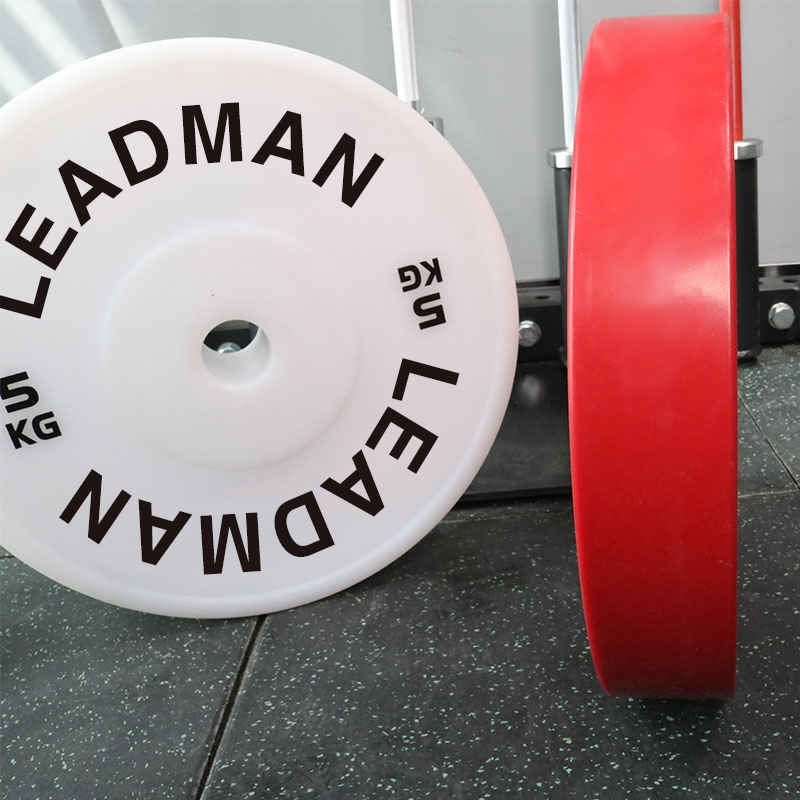
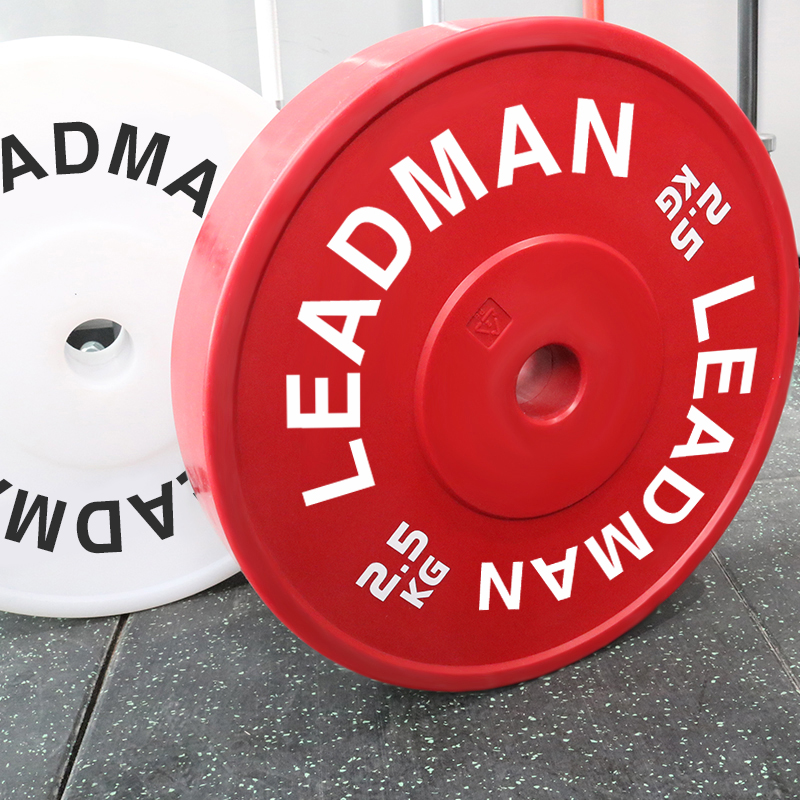
The colors: white/red serve a coaching purpose beyond aesthetics. White plates are typically 5kg and 1.25kg (lighter weights), while red plates are 2.5kg (mid-range) or sometimes 5kg in certain color-coding systems. The contrast between white and red allows coaches to visually verify loading from across the gym floor. For example, a barbell loaded with white+red+white on each side is immediately identifiable as 1.25kg + 2.5kg + 1.25kg = 5kg per side, total 30kg with a 20kg bar. This color coding follows the general pattern of competition bumper plates (25kg red, 20kg blue, 15kg yellow, 10kg green) but shifted to lighter weights.
For gym branding, the customized logo available option allows your facility's name or emblem to be debossed or pad-printed onto the PE surface. Because PE is non-porous, pad printing is more durable than on rubber—the ink bonds to the surface and resists scratching from plate-to-plate contact. Minimum order quantity for custom colors or logos varies; contact the manufacturer for details.
The 50.6±0.2mm center hole specification is tighter than many low-cost technique plates (which often have 51-52mm holes to reduce manufacturing precision). A hole that is too large (over 51mm) allows the plate to tilt on the barbell sleeve, causing the plate to wobble during the pull and potentially strike the lifter's legs. A hole that is too small (under 50.4mm) may bind on the barbell sleeve, especially after the plate warms up from friction, making plate changes difficult during circuit training.
The inner Ory: 2 likely indicates a two-part inner ring system: an inner PE layer directly contacting the barbell, plus a secondary reinforcement ring (perhaps nylon or brass) embedded 5-10mm deep into the plate. This reinforcement prevents the center hole from ovalizing after repeated drops. Many all-PE plates develop oval holes after 6-12 months of use, causing the plate to sit crooked on the bar. The "Ory 2" design addresses this weak point, extending the usable life of technique plates to 3-5 years in commercial settings.
| Plate Type | Center Hole Diameter | Fit on 50mm Barbell | Wobble Risk | Long-term Ovalization Resistance |
|---|---|---|---|---|
| Budget PE technique plates | 51-52 mm (loose) | Sloppy, tilts easily | High | Poor – hole stretches quickly |
| This Leadman PE plate | 50.6±0.2 mm | Snug but slides freely | Low | Good – inner ring reinforcement |
| IWF competition rubber plates | 50.4±0.1 mm | Very tight (press fit) | Very low | Excellent – steel insert |
The polybag + wooden case packaging is specified for international shipping. Each PE plate is individually sealed in a polybag to prevent dust accumulation and surface scratching during container transit. The plates are then stacked inside a plywood wooden case (not just a carton) because PE is relatively soft and can be dented by forklift forks or adjacent heavy items. The wooden case includes foam dividers between plates and meets ISPM-15 heat treatment standards for sea freight. For the 450mm diameter plates, the case interior dimensions are approximately 48cm × 48cm × (stack height + 5cm for foam).
The manufacturer Qingdao Modun Industry&Trade Co., Ltd, founded in 2010 and located in Shandong Province, specializes in weight plates, benches, racks, and barbells. Their experience with PE technique plates includes supplying to CrossFit affiliates, university weightlifting clubs, and technique-focused gyms across North America and Europe. The "Made in China" label is clearly visible on the product image, indicating origin transparency—important for customs clearance and country-of-origin labeling regulations.
The OEM: Accept OEM and Logo: Customized Logo Available specifications mean buyers can order technique plates with their own branding. Customization options include:
Sample orders (e.g., one pair each of 1.25kg, 2.5kg, 5kg) are available with lead times of 7-15 work days. Full production runs typically require 25-35 days after sample approval.
| Specification Category | Technical Details |
|---|---|
| Product Type | PE technique plate (polyethylene, not rubber bumper plate) |
| Available Weights | 1.25 kg, 2.5 kg, 5 kg |
| Outside Diameter | 450 mm (17.72 inches) – IWF competition standard |
| Center Hole Diameter | 50.6 ±0.2 mm (fits Olympic 50mm barbell sleeves) |
| Plate Thickness (by weight) | 1.25kg: 70mm | 2.5kg: 82mm | 5kg: 100mm |
| Material | Polyethylene (PE), density 0.93-0.97 g/cm³, Shore D hardness 60-65 |
| Colors (Standard) | White (5kg, 1.25kg), Red (2.5kg) – other RAL colors available for OEM |
| Inner Ring Reinforcement | 2-stage design (inner Ory: 2) – nylon or brass insert to prevent hole ovalization |
| Place of Origin | Shandong, China (manufactured by Qingdao Modun Industry&Trade Co., Ltd, est. 2010) |
| Application | Olympic weightlifting technique training, beginner instruction, youth programs, CrossFit foundations |
| Drop Height Rating | Controlled drops from waist height only (not for overhead dropping; for overhead use rubber bumper plates) |
| Logo Customization | Debossing or pad printing; minimum order quantity applies |
| Packaging | Individual polybag + wooden case (ISPM-15 treated plywood) for sea freight |
| Sample Lead Time | 7-15 work days (custom colors and logos extend timeline) |
| Port of Loading | Qingdao, China |
| Certifications | Manufacturer follows ISO 9001 processes (specific product certification available upon request) |