
The Making of Pro Dumbbells
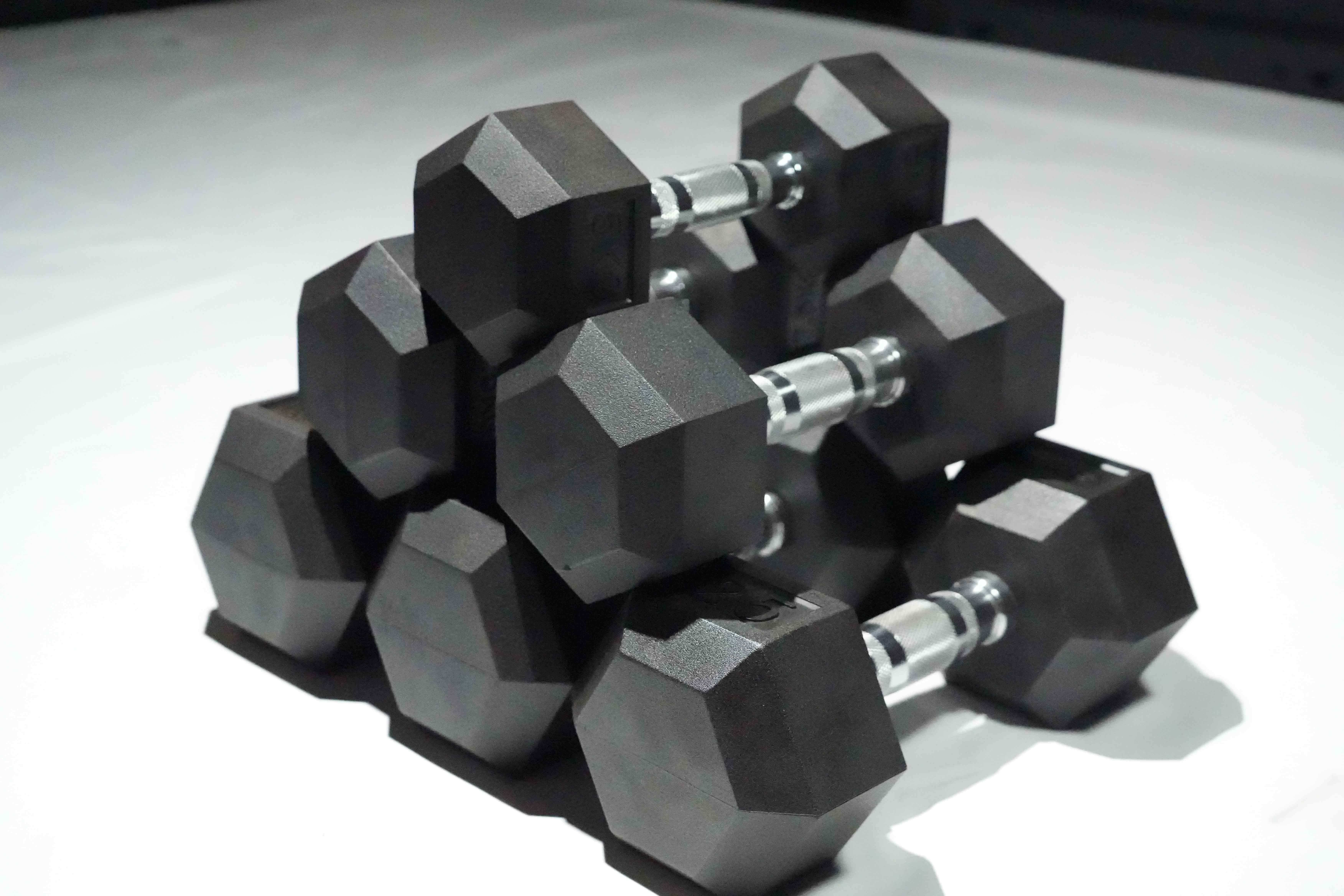
In the global fitness equipment landscape, manufacturing bases in regions like Qingdao have long been renowned for their rigorous industrial standards. When we discuss a professional dumbbell capable of withstanding tens of thousands of drops while maintaining a consistent grip, we are talking about a highly complex industrial ecosystem. This is far more than a simple assembly of metal and rubber; it is a precision evolution involving metallurgy, polymer chemistry, and ergonomic engineering. From the crystal structure of the alloy steel to the precise molecular locking facilitated by rotorless vulcanizers, every step determines the lifespan and safety of the equipment under extreme, high-frequency commercial use.
As the cornerstone of strength training, Leadman Fitness understands that the quality of a dumbbell directly impacts an athlete's rhythm and muscle recruitment. Today, we offer an in-depth look into the inner workings of a professional-grade factory, guiding you through the stringent processes from raw steel to the finished product. This is not just a manufacturing showcase; it is a tribute to industrial power and the spirit of professional competition.
I. The Solid Core: Precision Metal Engineering
Premium Round Steel Selection and High-Precision Cutting: Every masterpiece begins with a formidable core. We strictly reject cheap, brittle cast iron scrap in favor of commercial-grade high-carbon alloy round steel. At the raw material entry stage, every batch undergoes metallurgical analysis to ensure tensile and yield strengths can resist instantaneous impacts of several tons without deformation. The cutting process utilizes fully automated CNC saw machines to cut steel to millisecond precision. This is not merely about weight tolerance; it ensures absolute center-of-gravity symmetry in every pair of dumbbells—the first line of defense against wrist injuries in professional training.
The Soul of Tactile Feedback: CNC Machining and 1.2mm Standard Knurling: After cutting, the metal core enters high-speed CNC lathes for refinement. The most craft-intensive step is the knurling process on the handle. We adopt the same embossing technology used in Olympic weightlifting barbells, using imported precision hobbing cutters to press diamond-shaped anti-slip patterns with a depth of 1.2mm to 1.5mm. This process requires not only clear and uniform patterns but also a micro-texture that provides immense friction without being sharp enough to cut the palm. For professional lifters seeking a "human-machine unity" feel, this grip is the foundation of confidence for heavy presses.
Eternal Structural Integrity: Robotic Full-Penetration Welding: For commercial-grade fixed dumbbells, we fuse the processed weight heads with the handles. Leadman utilizes advanced six-axis industrial robotic welding stations. Compared to traditional manual welding, robots maintain a constant welding speed and heat input, ensuring full-penetration welds that fuse the handle and weight head at the molecular level. This structural bond passes over 100,000 fatigue cycle tests, completely eliminating common safety hazards like loosening, rattling, or "head detachment" seen in inferior equipment over time.
II. Surface Transformation and Material Preparation: From Raw Materials to Polymer Pre-treatment
Raw Material Screening: Eco-Friendly Virgin Rubber vs. Toxic Recycled Scrap: The "odor" and durability of a dumbbell depend entirely on the purity of the rubber. We insist on a scientific formula of virgin Natural Rubber (NR) and Styrene-Butadiene Rubber (SBR), strictly excluding toxic recycled materials containing high levels of Polycyclic Aromatic Hydrocarbons (PAHs). Inferior recycled rubber not only has a pungent smell but is also prone to cracking and crumbling, posing health risks to users. Leadman dumbbells are REACH and RoHS certified, ensuring they remain non-toxic and odorless in home gyms or high-end studios, truly protecting the respiratory health of every trainer.
Micro-Engineering: Molecular-Level Mixing and Milling: The core of rubber preparation lies in "internal mixing" and "open milling." Inside the internal mixer, high-molecular rubber is blended with ultra-fine carbon black reinforcement particles and anti-aging agents under high temperature and pressure. This breaks down molecular clusters to ensure isotropic physical properties. The rubber then enters the open mill, where it undergoes multiple kneading and calendering cycles to completely expel micro-bubbles, forming a dense, uniform rubber sheet. This process ensures that the dumbbell coating can evenly distribute pressure during heavy impacts, preventing localized damage.
Locking in Activity: Water Cooling and Precise Material Setting: Calendered rubber sheets must immediately pass through a circulating water-cooling system for rapid temperature reduction. This step is critical; it prevents "scorch" or premature vulcanization before the rubber enters the mold. By controlling the temperature, we lock in the chemical activity of the rubber, ensuring it possesses perfect fluidity during the final vulcanization stage to tightly wrap around every microscopic groove of the metal core.
Microscopic Anchoring: High-Efficiency Shot Blasting and the 48-Hour Salt Spray Challenge: Whether a dumbbell coating peels off depends on the shot blasting process. Processed metal parts are sent into a shot blasting machine where tens of thousands of steel pellets bombard the surface at high speeds, removing all oxide scales and creating millions of microscopic anchoring points. Subsequently, the metal parts must pass a rigorous 48-hour salt spray test to ensure no internal corrosion occurs even in high-humidity environments. Combined with high-performance rubber-to-metal bonding agents, these physical and chemical preparations ensure an "inseparable" bond between the rubber and the steel core.
III. The Union: High-Temperature Vulcanization and Chemical Awakening
Scientific Monitoring: The Intervention of the Rotorless Vulcanizer: This is the most technically advanced stage of the manufacturing chain. We utilize a **Rotorless Vulcanizer** to collect torque change curves of the rubber in real-time, accurately capturing the T10 (scorch) and T90 (optimum cure) times. This eliminates the quality fluctuations associated with empirical judgment, ensuring that every batch of dumbbells reaches its peak physical performance—offering both floor-protecting toughness and extreme wear resistance.
High-Pressure Molding: Molecular Fusion of Metal and Rubber: Inside the heavy-duty vulcanizing press, pre-set rubber and the metal core are placed into a mold at a constant 180°C. Under immense hydraulic pressure, a cross-linking reaction occurs, transforming the linear molecular chains of the rubber into a three-way network structure. Simultaneously, the bonding agent creates a chemical bridge between the rubber and metal, permanently "locking" the steel core inside the rubber layer. This process provides the dumbbell with its superior commercial qualities: silent impact, corrosion resistance, and floor protection.
Professional Material Comparison: Rubber VS CPU (Polyurethane)
| Performance Metrics | Commercial Premium Rubber | Top-Tier CPU Polyurethane |
|---|---|---|
| Durability / Lifespan | 5-8 Years (Ideal for commercial gyms) | 10+ Years (3-5x the tear strength of rubber) |
| Odor Level | Extremely Low (Eco-friendly virgin NR) | Zero Odor (Completely inert material) |
| Shock Absorption | Excellent cushioning and noise reduction | High rebound, resists permanent deformation |
| Aesthetic Texture | Classic matte finish, solid feel | Brilliant and smooth, high-precision Logos |
IV. Final Defense: Precision Inspection, Professional Packaging, and Global Delivery
Full-Dimensional Testing: 5,000 Drop Cycles and High-Precision Calibration: Even after passing through a complex manufacturing process, every dumbbell must face "judgment" before it is branded. We implement a strict ±1% weight tolerance for commercial products, with every single dumbbell undergoing electronic weighing and calibration. More importantly, we conduct sample "torture tests": dumbbells are dropped from a height of 2 meters for 5,000 consecutive cycles in a simulated environment. Only products that maintain a perfect bond between the coating and core, without a single crack, receive a certificate of quality.
Detail Refinement and Deep Cleaning: Products removed from the vulcanizer undergo meticulous manual deburring to ensure every edge is smooth and rounded. Subsequently, inspectors perform deep cleaning and anti-static treatment. We firmly believe that what we deliver to our customers should not just be a training tool, but an industrial work of art. The precision of every logo detail and the clarity of the weight markings are a testament to our brand's integrity.
Industrial-Grade Reinforced Packaging and Efficient Shipping: To handle the rigors of long-distance ocean freight, we utilize a multi-layered protection scheme. Each dumbbell is first placed in a moisture-proof PE bag, then into a thickened, high-strength corrugated box. For large-scale commercial orders, we customize solid wood pallets according to specifications and use industrial-grade stretch film for 360-degree wrapping. This multi-layer shockproof packaging ensures that whether on a vibrating truck or in a humid shipping container, every ounce of strength arrives at your training center in pristine condition.
FAQ about Inside the Barbell & Dumbbell Factory: Crafting Strength from Steel
Q1: Why is the knurling depth critical for professional dumbbells?
A1: Knurling provides necessary friction. Our precision knurling (1.2mm-1.5mm) offers a "sticky" feel without being abrasive, ensuring safety during heavy sets even when hands are sweaty.
Q2: What are the benefits of the 48-hour salt spray test?
A2: It simulates corrosive environments. By passing this test, we guarantee that handles are highly resistant to rust and corrosion caused by sweat and humidity, ensuring longevity in commercial gyms.
Q3: How does the Rotorless Vulcanizer improve product quality?
A3: It provides a precise "cure curve," monitoring rubber properties in real-time. This ensures optimal density and elasticity in every batch, eliminating issues like premature cracking or softening.
Q4: Is the rubber coating safe and odorless for indoor use?
A4: Yes. We use premium non-toxic compounds complying with REACH and RoHS standards. Our unique de-odorization process ensures no pungent chemical smell, making them safe for small home gyms and elite studios.
Q5: What is the main advantage of CPU (Polyurethane) over Rubber dumbbells?
A5: CPU is virtually indestructible and zero-odor. It has much higher tear resistance and a vibrant finish that stays looking new for years, making it the premier choice for luxury fitness facilities.
Conclusion: Every Rep Deserves to Be Treated Seriously
In the world of fitness, equipment is a silent partner. Good equipment allows you to forget its existence and focus entirely on every breath and every muscle contraction. By unveiling these meticulous manufacturing processes, we hope to convey that behind every heavy Leadman dumbbell lies more than just steel and rubber; it is our relentless pursuit of professional performance through robotic welding, rotorless vulcanization, and stringent testing. From raw steel to the peak of performance—choosing professional means choosing the best protection for your body.