
The Future of Hotel Fitness—Trends to Watch
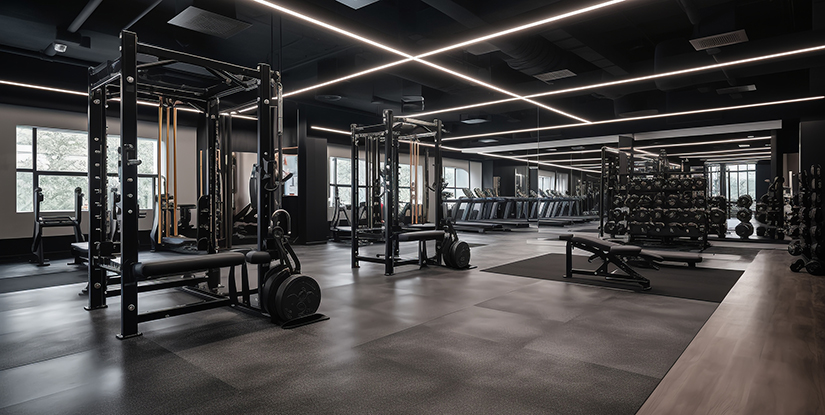
The Paradox of the Modern Hotel Gym: High Demand vs. Low Engagement
Hotel operators frequently encounter a specific, recurring frustration: the disconnect between capital expenditure and guest satisfaction. Many properties invest heavily in standard commercial-grade treadmills and weight benches, yet guest feedback consistently highlights that the fitness facilities feel 'dated' or 'uninspiring.' This failure is rarely due to a lack of equipment, but rather a failure to integrate the technological and experiential layers that modern travelers expect. The transition from a basic gym to a high-performance wellness center requires a fundamental shift in how equipment is selected, maintained, and presented.
The core problem lies in the obsolescence of static equipment. As guests become accustomed to personalized, data-driven workouts at home, a traditional gym with no connectivity feels like a step backward. To resolve this, operators must move beyond purchasing individual machines and instead invest in an interconnected ecosystem. This guide outlines the technical requirements and operational shifts necessary to navigate the emerging trends in the hospitality fitness sector.
Identifying the Stagnation Trigger
When a fitness center feels stagnant, the cause is often a lack of software interoperability. If a guest cannot sync their wearable device to the treadmill or access their favorite streaming platform via the machine's interface, the perceived value of the facility drops. To fix this, procurement teams must prioritize 'software-first' equipment that supports Bluetooth, ANT+, and integrated media casting.
Smart Equipment Integration and Connectivity Standards
The most significant trend in hotel fitness is the transition from standalone mechanical units to connected, IoT-enabled smart devices. This shift is driven by the consumer's desire for a seamless, frictionless experience. However, many operators fail at implementation by ignoring the underlying network requirements and software lifecycle management.
Implementing smart equipment is not merely about buying machines with screens; it involves ensuring the facility's local area network (LAN) can handle high-bandwidth video streaming and low-latency data transfer. Without a robust infrastructure, the 'smart' features will fail, leading to increased maintenance calls and guest complaints. When selecting equipment, operators should verify the compatibility of the hardware with standard hospitality Wi-Fi protocols and ensure that the manufacturer provides a clear path for firmware updates.
Technical Specification Comparison: Traditional vs. Smart Units
| Feature Requirement | Traditional Commercial Unit | Smart/Connected Unit (Modern Standard) |
|---|---|---|
| Data Connectivity | None (Manual Input Only) | Bluetooth, ANT+, Wi-Fi, NFC |
| User Interface | Static LED/LCD Display | High-Definition Touchscreen with OS |
| Software Ecosystem | Standalone | App-Integrated (Strava, Apple Health, etc.) |
| Content Delivery | Basic Metrics | On-Demand Video, Streaming, Gamification |
| Maintenance Notification | Manual Inspection Required | Automated Error Logs & Remote Diagnostics |
Verification of Connectivity Performance
Before finalizing a layout, operators must conduct a 'stress test' on the fitness center's bandwidth. Use a standard diagnostic tool to measure latency during peak usage simulations. If the equipment is expected to stream 4K video content, the signal-to-noise ratio in the fitness room must be high enough to prevent buffering, which is a primary driver of negative guest sentiment.
Biometric Integration and the Rise of Personalized Wellness
The next evolution in hotel fitness is the integration of biometric feedback. Guests no longer want generic workout regimens; they want routines tailored to their current physiological state. This requires equipment that can communicate with wearable technology to adjust resistance, pace, or even environmental temperature based on real-time data.
The mechanism behind this is the API (Application Programming Interface) integration between the machine and the user's mobile ecosystem. A successful implementation allows a guest to walk up to a rowing machine and, through a simple tap, have the machine instantly adjust to their personal power profiles. The failure point in this trend is usually data fragmentation—where the equipment and the wearable cannot 'talk' to each other due to closed proprietary systems.
Implementation Checklist for Biometric Readiness
- Verify API Availability: Ensure the equipment manufacturer provides open APIs for third-party integration.
- Establish Data Security Protocols: Implement strict protocols for how guest biometric data is handled to ensure GDPR and CCPA compliance.
- Check Sensor Accuracy: Periodically calibrate heart rate sensors and resistance adjustments to ensure they align with consumer-grade wearable data.
Related reading:
Optimizing Physical Layout for Multimodal Workouts
A common mistake among hotel operators is the 'row-of-machines' layout. This approach ignores the trend toward functional training and high-intensity interval training (HIIT). Modern guests want space for movement—yoga, mobility work, and kettlebell training—not just seated cardio. If the layout is too cramped, it limits the utility of the space and creates a perception of a low-end facility.
To solve this, operators should implement a 'Zoned Approach.' This involves dividing the space into distinct functional areas: a cardio zone, a strength zone, and a flexible movement zone. The movement zone should feature high-quality flooring and open space that can be used for various activities. This flexibility increases the utility of the square footage and allows the hotel to market the space as a 'Wellness Studio' rather than just a 'Gym.'
Zonal Distribution Framework
The following table provides a baseline for successful spatial allocation in a mid-to-high-tier hotel fitness center:
| Zone Type | Primary Equipment Examples | Flooring Requirement | Ambient Control Needs |
|---|---|---|---|
| Cardio Zone | Treadmills, Ellipticals, Bikes | Acoustic-damping rubber mats | High airflow/ventilation |
| Strength Zone | Dumbbells, Racks, Benches | Heavy-duty impact-resistant rubber | Enhanced structural support |
| Functional/Mobility | Yoga Mats, Kettlebells, TRX | High-density EVA foam or corkMinimal noise/high acoustics||
| Recovery Zone | Foam Rollers, Massage Tools | Soft, non-slip surfaceDimmer lighting/Relaxation focus
Related reading:
Automated Maintenance and Lifecycle Management
The highest cost in hotel fitness operations is often the 'reactive maintenance' cycle—fixing things only after they break. This is a symptom of poor preventive maintenance and a failure to leverage modern diagnostics. In the future of hotel fitness, maintenance must be proactive and data-driven.
Modern commercial-grade units often feature remote diagnostic capabilities. This means the equipment can send an automated alert to the facility manager's tablet or computer when a specific component (like a drive belt or a sensor) is nearing its end-of-life or has failed. Operators should select equipment that offers a centralized management dashboard. This allows for the tracking of total usage hours across all machines, which is a much more accurate metric for maintenance than a simple calendar schedule.
Preventing Premature Component Failure
Problem: High turnover of treadmills due to motor failure.
Cause: Excessive dust accumulation and lack of regular belt tension checks.
Fix: Implement a weekly automated cleaning log and utilize machines that alert the system when resistance levels deviate from the norm.
Verify: Check the central dashboard monthly to ensure all 'service required' flags are addressed within 24 hours of appearing.
Related reading:
The Role of Environmental Control: Lighting and Air Quality
The future of fitness is not just about what the body does, but how the environment supports it. Many hotels neglect the 'soft' elements of the gym experience: lighting and air quality. A gym with flickering fluorescent lights and stuffy air will never be perceived as a premium wellness destination.
The technical solution is the integration of Circadian Lighting and advanced HVAC (Heating, Ventilation, and Air Conditioning) controls. Circadian lighting shifts the color temperature throughout the day—cooler, brighter light in the morning to energize, and warmer, dimmer light in the evening for recovery. For air quality, the HVAC system should be tuned to prioritize high air-exchange rates in the fitness center to mitigate odors and CO2 buildup. This is a critical differentiator for luxury properties.
Environmental Verification Checklist
- Lighting Check: Measure the Lux levels during different times of the day to ensure compliance with circadian patterns.
- Airflow Test: Use a handheld anemometer to ensure sufficient CFM (cubic feet per minute) in the cardio zone. - Odor Audit: Conduct weekly sensory audits to ensure the HVAC system is effectively scrubbing the air.
Future-Proofing Your Investment: Scalability and Modular Design
As technology evolves, the equipment purchased today may become obsolete within three years. To avoid a total replacement cycle, operators must look for modularity. This means choosing equipment where the technology (the screen, the processor, the sensor) can be upgraded independently of the mechanical chassis.
When negotiating with suppliers, ask about the 'upgrade path' for the software and hardware. Can the console be swapped for a newer model without replacing the entire treadmill? Is the software subscription-based or a one-time purchase? A scalable approach ensures that your facility remains at the cutting edge of the industry without requiring a massive capital outlay every few years.
Comparison of Procurement Models
| Model Type | Initial Capital Outlay | Long-term Value | Technology Lifecycle |
|---|---|---|---|
| Standard Procurement | Moderate | Low (High Obsolescence Risk) | Fixed (Hard to Upgrade) |
| Modular/Scalable Procurement | Higher | High (Easier to Evolve) | Flexible (Component Upgrades) |
| Subscription-Based (Equipment-as-a-Service) | Low (OpEx focus) | Very High (Constant Updates) | Continuous (Managed by Supplier) |
Conclusion: Moving from Gym to Wellness Ecosystem
The future of hotel fitness is defined by the convergence of physical activity, digital connectivity, and environmental optimization. To stay competitive, hotel operators must stop treating the gym as a secondary amenity and start treating it as a core component of the guest's wellness journey. By focusing on connectivity, smart maintenance, and modularity, you can build a facility that not only meets current trends but is built to adapt to the ones that follow.