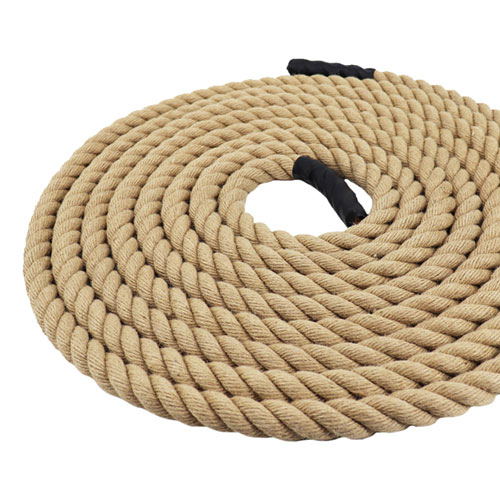
The climbing rope is a fundamental piece of functional fitness equipment, used for vertical climbs, rope pulls, and upper body conditioning. Made from jute material, this rope offers good toughness, natural grip, and resistance to breaking and corrosion. With a 50mm diameter, it suits athletes of all sizes—thick enough for secure gripping but not so large as to be uncomfortable for smaller hands.
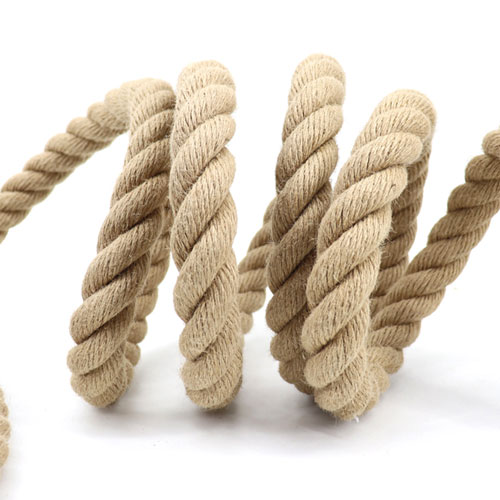
Unlike synthetic ropes that can become slippery when sweaty, jute provides a natural textured surface that improves grip as it breaks in. The construction features knit tight, clear lines, indicating consistent manufacturing quality with uniform strand tension throughout the rope length. This prevents weak spots that could lead to premature failure under heavy loads.
The jute material specification is significant. Jute is a natural vegetable fiber (from the Corchorus plant) prized for its high tensile strength, low stretch, and excellent knot-holding ability. Key advantages of jute climbing ropes:
The strong tensile resistance not easy to slip claim confirms that the rope maintains its structural integrity under dynamic loading—critical for climbing drills where the rope supports full bodyweight plus momentum forces.
The diameter: 50mm (approximately 2 inches) is the standard size for professional climbing ropes in fitness settings. This diameter offers:
For reference, competitive climbing ropes are typically 38-40mm; 50mm is standard for gym fitness climbing where durability and accessibility are priorities over competition specificity.
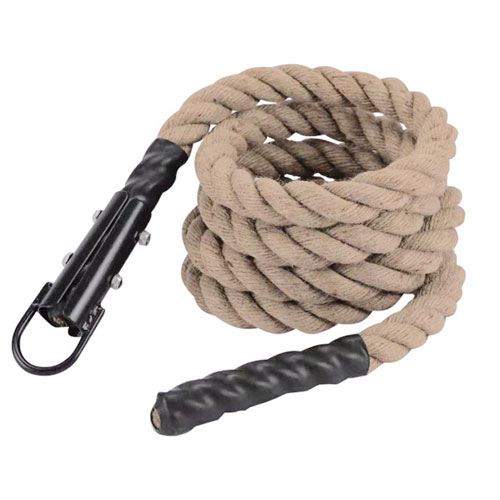
The wrapping rubber for handle feature refers to a protective rubber sleeve at the anchor end of the rope (where it attaches to the ceiling or structure). This rubber wrapping prevents the rope from fraying against steel connection hardware. Benefits include:
The length of rubber wrapping is not specified; typical wraps are 30-50cm. For custom lengths, inquire with the manufacturer.
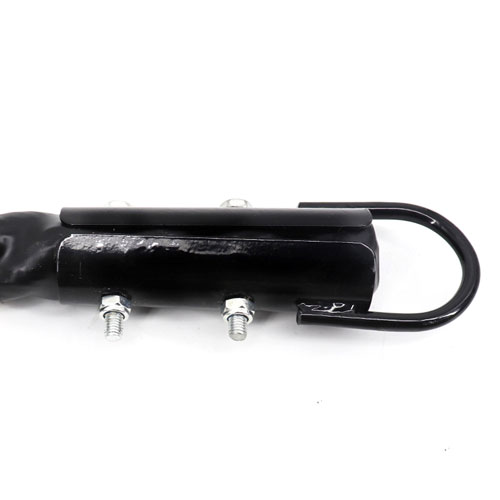
The fixed hook and roof connection specifications indicate that the rope includes pre-installed hardware for ceiling mounting. The fixed hook is typically:
The roof connection refers to the mounting hardware (eye bolt, beam clamp, or ceiling plate) used to attach the hook to the building structure. Important installation requirements:
Verify if the manufacturer includes the ceiling anchor hardware or only the rope-mounted hook. If only the hook is included, purchase appropriate ceiling anchors separately.
The fixed hook customized logo option allows gym branding on the metal connection hardware. Logo application methods include:
Logo placement on the hook provides visible branding without interfering with rope function or grip. For gyms with multiple climbing ropes, logo placement also helps identify brand-owned equipment vs. member equipment.
Classified under function: body building and type: fitness accessories, the climbing rope targets specific training outcomes:
For usage: fitness exercise, the rope supports various training protocols:
The rope is engineered for not easy to break, not easy to corrode. Understanding these claims:
Break resistance: Jute fibers have high tensile strength (approximately 300-500 MPa). The knit tight, clear lines construction ensures load is distributed across all strands evenly. A well-made 50mm jute rope has a breaking strength of 1000-2000kg, far exceeding the 150-300kg dynamic load from an adult climber. The safety factor (5-10×) ensures the rope will not break under normal use.
Corrosion resistance: Jute is naturally moisture-resistant when dry. However, jute can degrade if left wet or stored in humid conditions. To prevent corrosion (rot):
For humid gym environments, synthetic ropes (polyester or nylon) offer better moisture resistance, but jute provides superior grip. Consider climate conditions before purchasing jute.
Proper installation is critical for safety. The roof connection must be secured to structural framing:
Important safety note: Climbing rope installation should be performed by qualified professionals. Improper anchoring can lead to rope detachment during use, causing serious injury. The manufacturer is not responsible for installation errors.
To maximize rope lifespan:
Expected lifespan: With proper maintenance, jute climbing ropes last 2-4 years in commercial gyms (daily use) and 5-10 years in home gyms (weekly use).
| Specification Category | Technical Details |
|---|---|
| Product Name | Climbing Rope (Jute Material) |
| Material | Jute (natural vegetable fiber) – knit tight, clear lines construction |
| Diameter | 50mm (approx. 2 inches) |
| Rope Length | Not specified – custom lengths available (typical climbing ropes 3m, 4m, 5m) |
| Handle Feature | Wrapping rubber for handle (protective sleeve at anchor end) |
| Connection Hardware | Fixed hook (pre-attached) + roof connection anchor hardware (verify inclusion) |
| Category | Fitness Accessories / Climbing Equipment |
| Function | Body Building – grip strength, upper body pulling, core conditioning |
| Usage | Fitness Exercise – vertical climbs, rope pulls, conditioning drills |
| Key Characteristics | Good toughness, not easy to break, not easy to corrode, strong tensile resistance, not easy to slip |
| Logo Customization | Customized logo available (on fixed hook – laser engraving, pad printing, or stamping) |
| Minimum Breaking Strength | Not specified – typical 50mm jute rope rated 1000-2000kg |
| Safe Working Load | Recommended 200-300kg (5-10× safety factor) |
| Place of Origin | Shandong, China |
| Port of Loading | Qingdao |
| Packaging | Coiled or straight (depending on length) – polybag + carton |
| Sample Lead Time | 7-15 work days |
| OEM Availability | Yes – custom length, custom logo on hook, rubber wrap color |
| Installation Requirement | Secure anchoring to structural ceiling (wood joist, steel beam, or concrete) – professional installation recommended |
| Maintenance | Air dry after use, brush clean, inspect for wear/rot, avoid moisture storage |
| Expected Lifespan | 2-4 years commercial, 5-10 years home (with proper maintenance) |