Selecting Custom Fitness Equipment Manufacturers for High-Performance Facilities

Addressing Structural Integrity Failures in Commercial Gyms
Commercial facility operators often encounter premature equipment fatigue, most notably in the form of weld fractures, loose bolt connections, and surface degradation. These failures are rarely the result of a single event; rather, they stem from a systemic misalignment between design specifications and the manufacturing capabilities of the chosen partner. When a piece of equipment fails, the cause is typically traced back to inadequate material grades or substandard joining techniques. A specialized manufacturer must address these root causes through rigorous control of the entire production lifecycle.
Understanding these failure modes is the first step toward establishing a procurement standard that prioritizes durability over initial cost. Before examining the technicalities of fabrication, it is essential to understand why these structural issues arise and how a professional manufacturing partner mitigates them through advanced material selection.
Related reading:
Material Grade Selection and Metallurgical Requirements
The durability of custom strength equipment is directly proportional to the quality of the raw materials used during the initial stage of production. A common mistake among lower-tier manufacturers is the use of unidentified mild steel or substandard alloys that lack the necessary tensile strength for high-impact use. This results in frame warping or catastrophic failure under heavy loads.
Steel Gauge and Composition Standards
Professional custom fitness equipment manufacturers rely on high-grade carbon steel or specialized alloys with specific wall thicknesses (gauges). For heavy-duty strength equipment, a 11-gauge (approx. 3mm) or 10-gauge (approx. 3.4mm) steel tubing is the industrial standard for main frames. Using thinner gauge steel may reduce weight and shipping costs, but it significantly increases the risk of buckling under dynamic loads. High-quality manufacturers provide material certifications to prove the carbon content and strength profiles of their steel batches.
Impact of Material Quality on Longevity
The following table illustrates the distinction between standard commercial-grade materials and premium custom-engineered specifications.
| Component Type | Standard Specification | Premium Custom Specification | Impact on Durability |
|---|---|---|---|
| Main Frame Tubing | 14-Gauge Mild Steel | 11-Gauge High-Tensile Steel | Reduces frame deflection and buckling |
| Load-Bearing Joints | Standard Mild Steel | Chromoly or Reinforced Alloy | Increases fatigue resistance at stress points |
| Bearing Surfaces | Standard Nylon/Plastic | Industrial Grade Polyurethane/Bronze | Extends the interval between maintenance cycles |
| Coating Material | Standard Powder Coat | Electrostatic High-Durability Polymer | Prevents corrosion and superficial chipping |
Selecting the correct metallurgical foundation ensures that the subsequent fabrication steps have a stable, high-strength base to work with. Once the material is validated, the focus shifts from the raw input to the precise execution of the fabrication process itself.
Precision in Fabrication and Component Shaping
Having secured high-grade materials, the manufacturing process moves into the physical shaping and assembly phase. This is where the discrepancy between a generic product and a custom-engineered piece becomes most apparent. The precision of the fabrication determines how well the components interface during high-intensity use.
CNC Tube Bending and Laser Cutting
To achieve the complex geometries required for modern ergonomic fitness machines, manufacturers employ Computer Numerical Control (CNC) technology. CNC tube bending allows for seamless transitions in the frame architecture, minimizing the number of weld points and potential failure locations. Similarly, laser cutting ensures that every component, from plates to adjustment pins, has a perfect fit. A lack of precision in these stages leads to 'slop' or mechanical play in the machine, which causes noise and uneven wear over time.
The Mechanism of Component Alignment
In a custom build, every angle and length must be mathematically perfect to ensure that the mechanical path of the weight stack or the movement of a resistance lever remains smooth. If a laser cutter produces a piece that is even a millimeter out of spec, the cumulative error across multiple connected parts can lead to a machine that feels 'jittery' or inconsistent. This precision is non-negotiable for high-end facilities where user experience is a primary metric.
The integrity of these shapes is only as strong as the joints that connect them, making the welding process the most critical checkpoint in the manufacturing workflow.
Related reading:
Advanced Welding Protocols and Joint Integrity
Welding is often the weakest link in fitness equipment construction if not executed with industrial-grade precision. A poorly executed weld can lead to heat-induced warping of the frame or, more dangerously, a brittle joint that snaps under sudden impact. Professional manufacturers use these processes to create monolithic structures that act as a single, rigid unit.
TIG vs. MIG Welding Techniques
Different parts of a machine require different welding methodologies. Metal-to-metal connections in high-stress areas often require TIG (Tungsten Inert Gas) welding for its superior control and clean finish, or high-spec MIG (Metal Inert Gas) welding for deep penetration and strength. A common failure in lower-quality manufacturing is 'surface-only' welding, where the weld looks clean but fails to penetrate the depth of the steel, leading to internal cracks.
Weld Inspection and Penetration Testing
To verify the integrity of a joint, manufacturers should ideally employ non-destructive testing (NDT) methods. This includes visual inspection for porosity and undercut, as well as more advanced checks to ensure the heat-affected zone (HAZ) has not compromised the structural properties of the adjacent steel. A well-manufactured joint should show a consistent, smooth bead that indicates uniform heat distribution and full penetration.
While the strength of the weld is paramount, the machine's outward durability is also heavily reliant on how those metal surfaces are treated before they hit the gym floor.
Surface Finishing and Corrosion Resistance
The environment of a commercial gym—often characterized by humidity, sweat, and constant physical contact—is inherently corrosive to metal. A machine with a strong frame but a poor finish will succumb to cosmetic and structural rust within a few years. High-end custom manufacturers treat the surface finish as a functional requirement rather than a purely aesthetic one.
Electrostatic Powder Coating Processes
The gold standard for fitness equipment is electrostatic powder coating. This process involves applying a dry powder to the metal through an electrostatic charge, which is then cured in an oven to create a hard, durable skin. This coating is much more resistant to impact and chemical exposure (such as cleaning agents) than liquid paint. A failure in the coating process often manifests as 'flaking' or 'peeling' around the edges of joints and adjustment points.
Surface Roughness and Grip Ergonomics
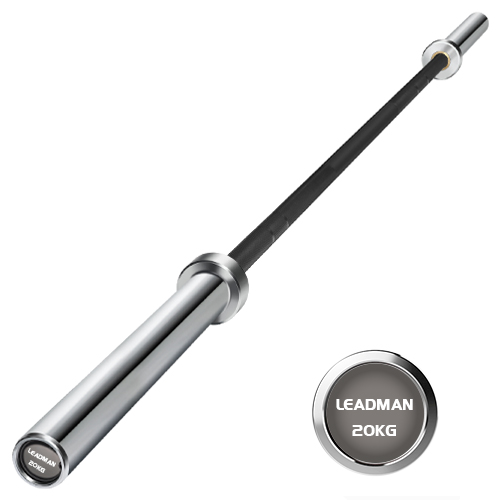
Beyond corrosion, the texture of the finish plays a role in usability. For example, the knurling on a barbell or the texture of a handle grip must meet specific roughness parameters to ensure a secure grip without being overly abrasive. Manufacturers must balance the smoothness of the paint with the ergonomic needs of the user to prevent slipping during high-intensity movements.
The quality of the surface finish sets the stage for the final assembly, where all the individual parts are brought together into a functional machine.
Mechanical Assembly and Tolerance Management
The final assembly stage is where the individual components—the frames, the weight stacks, the bushings, and the cables—are integrated. This phase is where many 'custom' manufacturers reveal their lack of technical depth, as even the best-made parts will fail if they are not assembled with strict adherence to tolerance standards.
Tolerance Thresholds in Moving Parts
In a commercial-grade unit, the clearance between moving parts (such as a weight stack and its guide rods) must be extremely tight to prevent vibration, yet loose enough to prevent binding. If the tolerances are too wide, the machine will rattle and feel unstable; if they are too tight, the friction will cause premature wear and heat buildup. Professional manufacturers use precision-ground guide rods and high-grade bushings to manage these tolerances across the machine's entire range of motion.
Hardware and Fastener Integrity
A frequently overlooked aspect of assembly is the type of hardware used. Custom manufacturers should specify high-tensile bolts and specialized locking mechanisms (like nylon-insert nuts) to prevent vibration from loosening the assembly over time. A machine that requires constant retightening of bolts is a sign of poor assembly planning and low-grade hardware.
| Assembly Element | Standard Approach | Professional Custom Approach | Failure Mode if Improper |
|---|---|---|---|
| Guide Rods | Standard Steel Rods | Chrome-Plated Hardened Steel | Binding or erratic weight movement |
| Fasteners | Standard Hex Bolts | High-Tensile Grade with Locking Nuts | Vibration-induced loosening/rattling |
| Bearing Systems | Basic Ball Bearings | Sealed Industrial Bearings | High friction and excessive noise |
| Cable Systems | Standard Steel Cable | Coated Nylon-Encased Steel | Fraying and cable stretch |
Effective assembly ensures that the strength and precision engineered in the fabrication stage are actually felt by the end-user during operation.
Quality Control Protocols and Verification Cycles
A robust manufacturing process is incomplete without a rigorous quality control (QC) framework. For custom fitness equipment, QC must occur at multiple stages—not just at the end of the line. Relying solely on a final inspection is a high-risk strategy, as systemic errors in the fabrication or welding stages might not be detectable until the machine is already in use.
In-Process vs. Final Inspection
In-process inspection involves checking the dimensions and quality of parts while they are still in the middle of the production cycle. For example, checking the weight of a component or the angle of a bend before it is welded to the frame. Final inspection, on the other hand, involves testing the fully assembled machine under load. A truly high-end manufacturer will perform load-testing, where the equipment is subjected to more weight than its rated capacity to ensure the structural limits are met.
The Importance of Batch Testing
For custom orders involving multiple units, manufacturers should conduct batch testing to ensure consistency. If the first unit is perfect but the tenth unit has a slight misalignment in the pulley system, it indicates a drift in the manufacturing process. Consistent quality across an entire order is the hallmark of a professional manufacturing partner.
Once these quality standards are met, the manufacturer moves toward the delivery and long-term operational support phase.
Related reading:
Lifecycle Management and Operational Maintenance
The relationship with a custom manufacturer should not end at delivery. To maximize the return on investment (ROI) for a facility, the equipment must be managed through a structured lifecycle. Even the most durable custom-built equipment requires a maintenance cadence to prevent the small issues mentioned earlier from becoming major structural failures.
Preventative Maintenance Intervals
Operators should establish a routine that includes checking bolt torque, lubricating guide rods, and inspecting cables for fraying. Most structural failures in commercial gyms are preventable if the maintenance is performed according to the manufacturer’s technical specifications. For example, a simple application of high-grade lubricant to the guide rods can prevent the excessive wear that eventually ruins the bearing system.
Evaluating Long-Term Durability and ROI
When calculating the total cost of ownership, the initial price of the equipment is only a fraction of the total. A high-quality custom-built machine with superior materials and precision manufacturing will have a much lower cost-per-year than a cheaper alternative that requires frequent repairs or replacement. Therefore, the technical specifications documented during the procurement process become the foundation for the long-term success of the facility's equipment fleet.