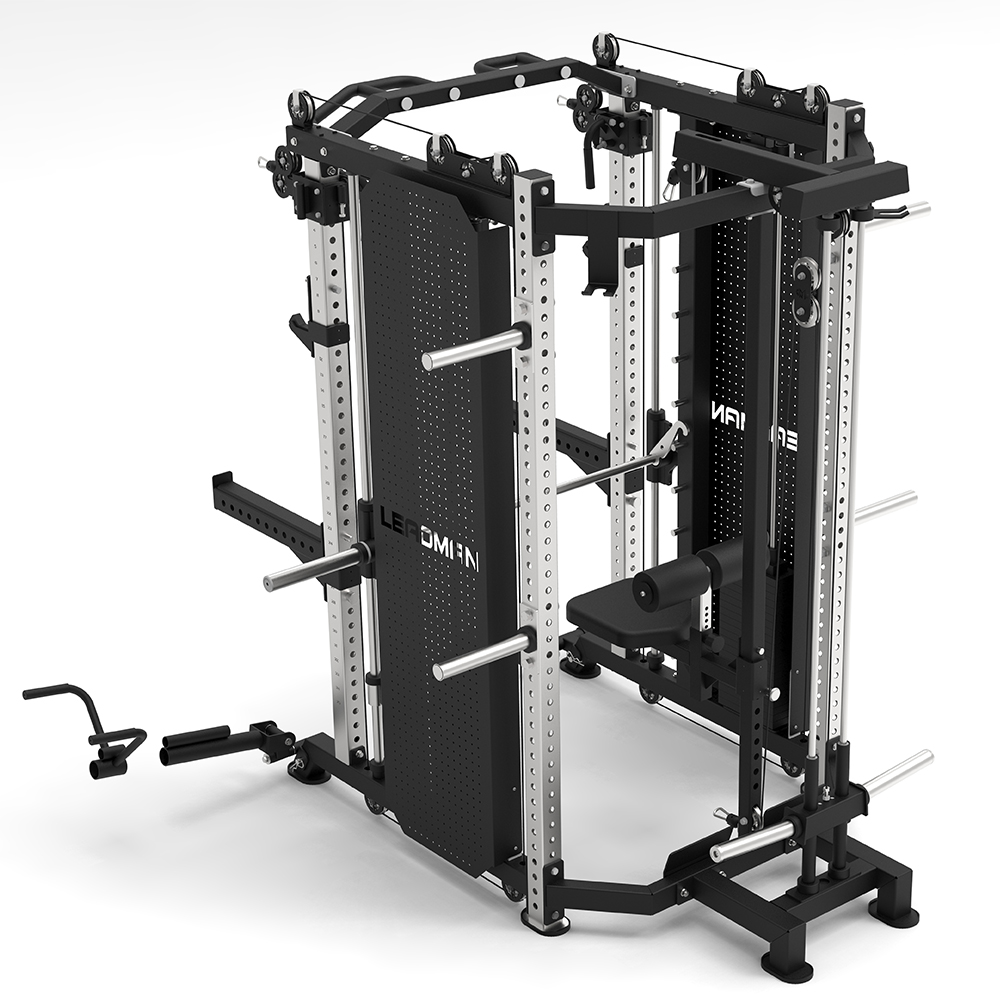
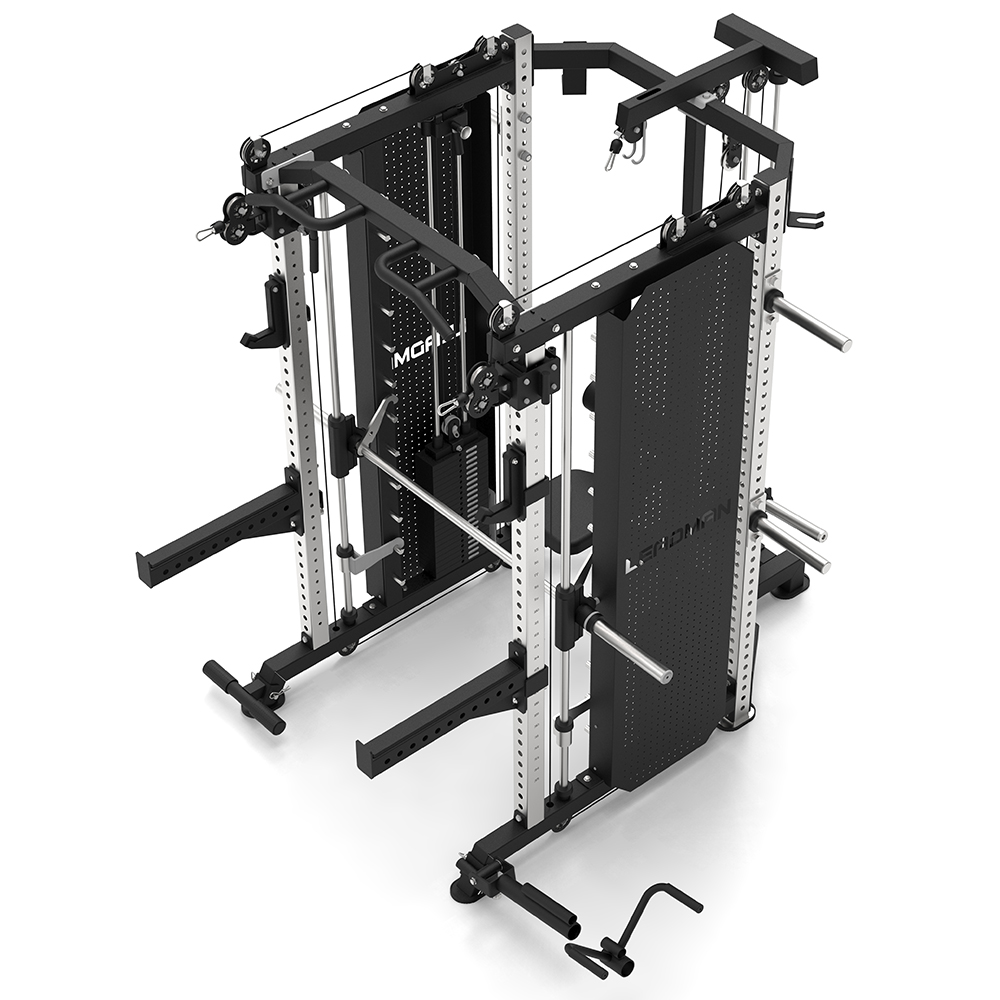
In the crowded landscape of multifunction trainers, the distinction between a collection of parts and a truly integrated training system is defined by structural integrity, mechanical precision, and thoughtful versatility. The All-in-One Functional Training System showcased here represents a convergence of commercial-grade engineering and user-centric design, moving beyond the limitations of traditional home gyms or single-station equipment. It is engineered to deliver a comprehensive full-body workout experience without compromise, targeting everyone from dedicated strength athletes to commercial facility owners seeking maximum value per square meter. This system does not merely combine functions; it integrates them into a stable, smooth, and safe platform for progressive training.
The core philosophy behind this equipment is to eliminate the need for multiple standalone machines. By strategically combining a high-capacity Smith machine, a functional trainer with dual adjustable pulleys, a plate-loaded leg developer, a dedicated landmine attachment, and a multi-grip pull-up station, the system creates a complete strength ecosystem. For facility managers, this means optimizing floor space and capital expenditure. For the home user, it transforms a single garage bay or basement corner into a full-service strength and conditioning studio. The following analysis delves into the specific engineering choices and performance benefits that define this all-in-one solution.
The most common failure point of multifunction equipment is structural flex under load. When a rack twists or shakes during heavy squats, pull-ups, or cable crossovers, it not only undermines performance but also poses a safety risk. The manufacturer of this system has addressed this head-on by specifying a hardcore structural frame built from high-grade, heavy-duty steel.
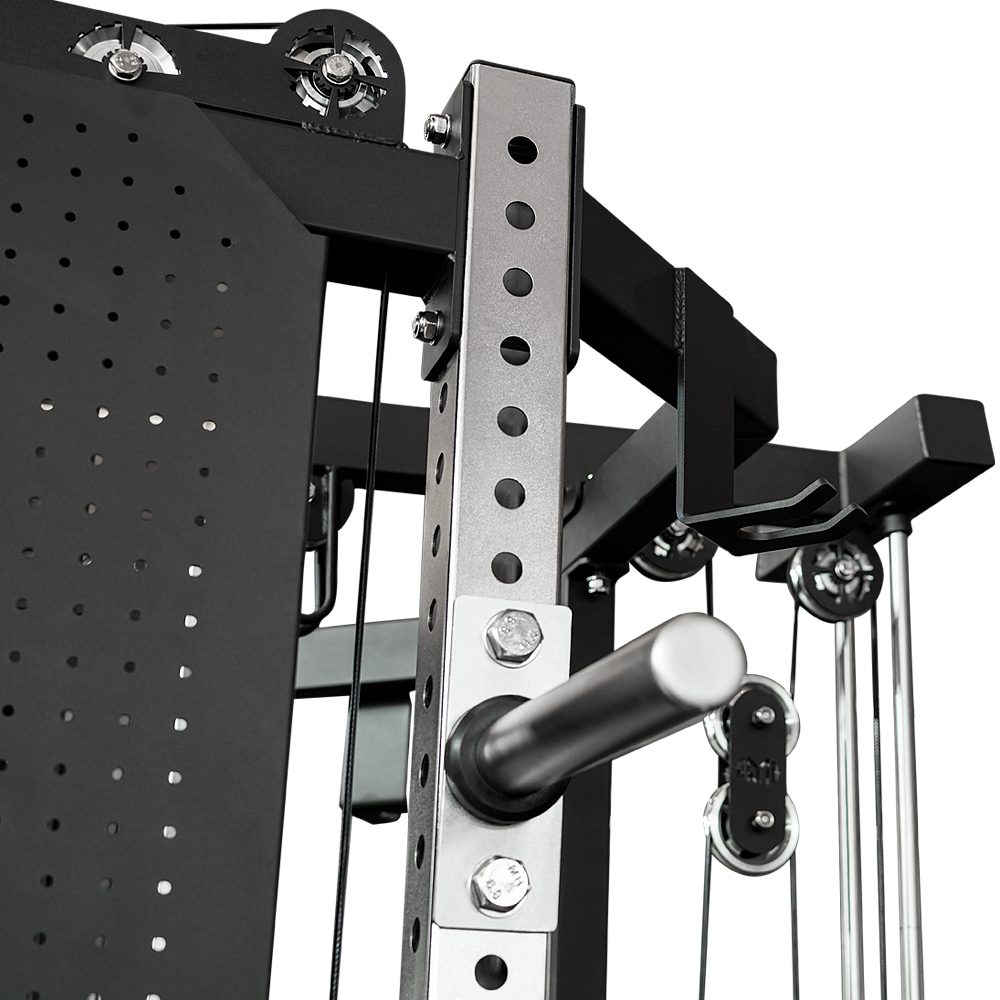
The critical specification here is the use of F75×3mm thickened square tubing across all four main uprights. This is a deliberate departure from standard 50x50mm or 2mm-thick frames commonly found in lower-tier products. The increased wall thickness (3mm) provides exceptional resistance to bending and torsional forces, ensuring the frame remains inert regardless of the load applied. This is particularly important during exercises like Smith machine squats near the rack’s maximum capacity or when performing explosive landmine rows, where dynamic forces can introduce significant stress. The manufacturer’s claim of "Zero Offset, Zero Shake" is a direct result of this over-engineered foundation, translating to a solid, confidence-inspiring training experience.
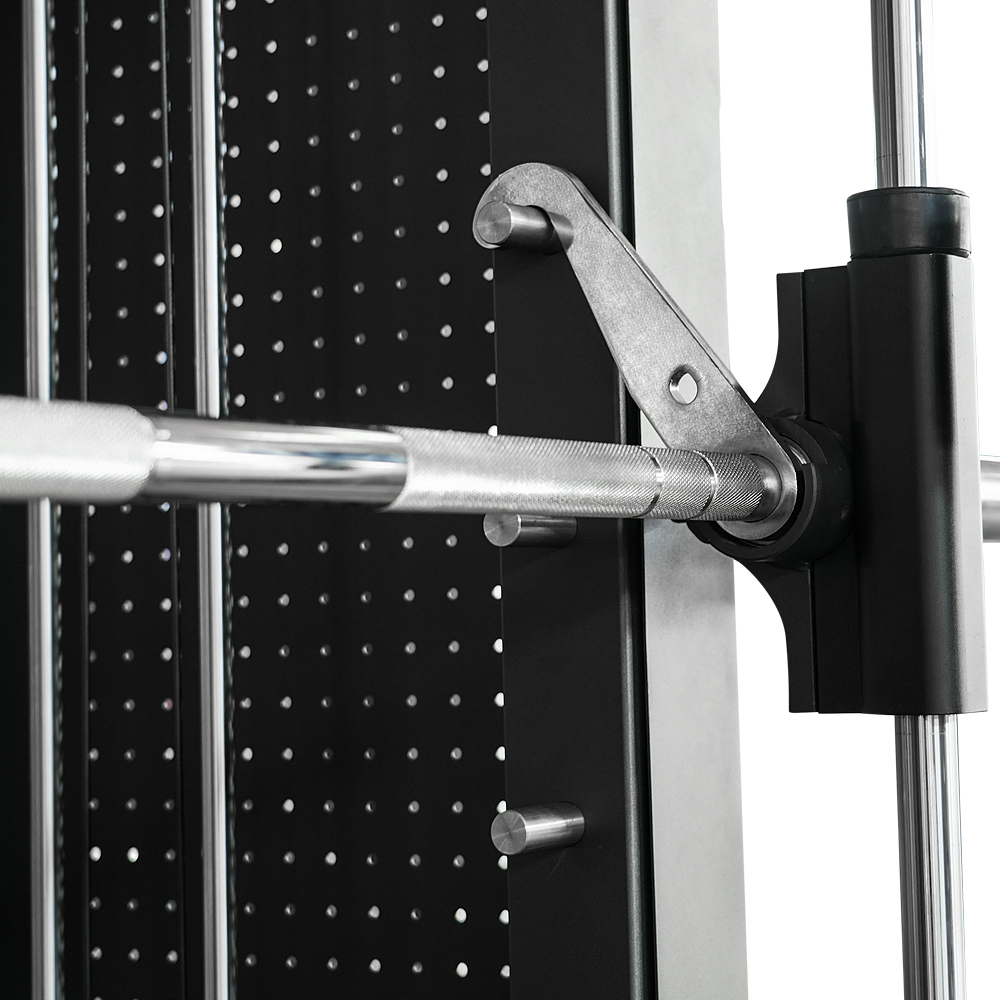
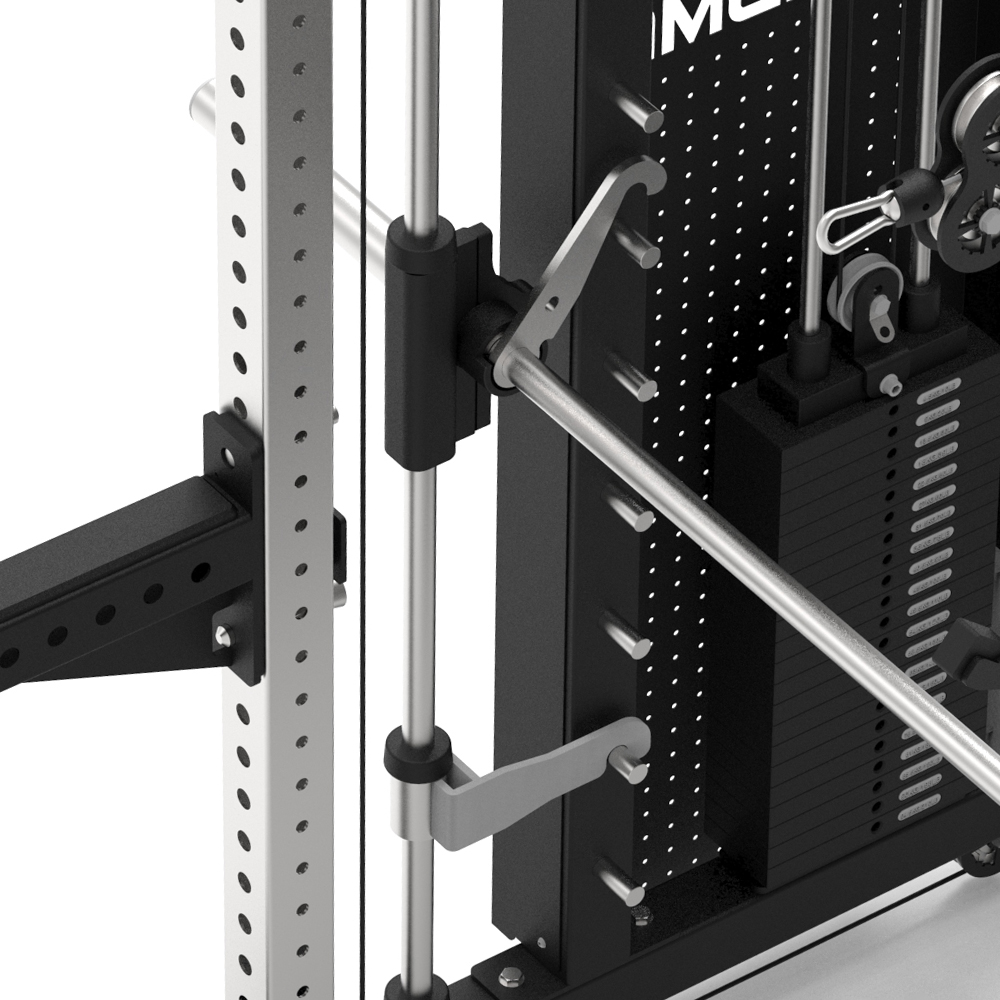
A dedicated Smith machine is a centerpiece of this system, and its performance is dictated by the guide rod system. This model utilizes 30mm Smith guide rods, which are thicker than the industry-standard 25mm or 28mm rods found on many competing units. The 30mm diameter provides a larger bearing surface, distributing friction and load more evenly across the linear bearings.
The practical outcome is a dramatically smoother, more stable bar path. When performing explosive movements like power cleans or bench presses, the thicker rods eliminate lateral play and "stiction" (static friction). Users will experience a fluid, predictable glide that allows them to focus entirely on power output and form, rather than fighting a sticky or wobbly bar. Furthermore, the robust construction of the guide rods and their attachment to the 3mm frame prevents the vertical deflection that can cause the bar to bind during offset loading, ensuring consistent resistance throughout the entire range of motion.
Safety is paramount in any strength training environment, particularly with a Smith machine and free-weight compatibility. This system features a two-tiered safety approach. First, the sandwich hooks provide a secure, adjustable point to catch the Smith bar at the end of a repetition, allowing for confident failure during bench presses or squats. Their design ensures the bar cannot accidentally roll off the catch.
Second, the safety rack hooks are designed to work in tandem with the Smith guide rods. These are not simple pins; they are engineered catches that interface directly with the rod system, adding an extra layer of emergency protection. In the event of a missed lift or a sudden drop, these catches engage positively, preventing the bar from descending further. Additionally, the detachable spotter arms (visible in the assembly) allow for safe free-weight barbell work outside the Smith machine rails, making the rack functional for traditional squats and bench presses. This dual-path safety architecture ensures the unit is suitable for solo training at any intensity level.
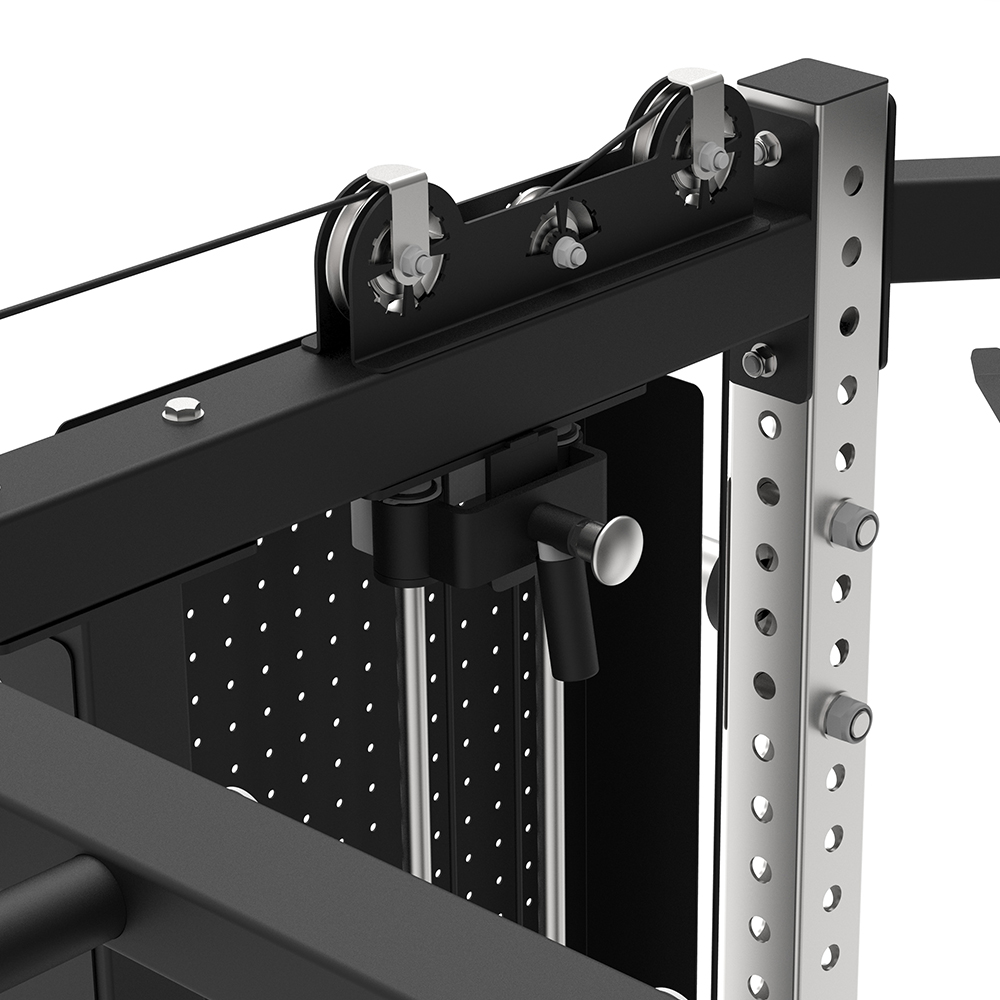
Cable attachments are often the first component to fail on multifunction trainers, with pulleys developing flat spots and cables fraying under load. This system distinguishes itself with a premium aluminum pulley assembly backed by high-precision bearings. This is a significant upgrade from the ubiquitous nylon or plastic pulleys used in consumer-grade equipment.
The high-strength aluminum body provides a rigid, non-deforming track for the cable, ensuring the cable travels in an exact plane. This eliminates the lateral wobble and "clicking" often heard on cheaper pulleys. More importantly, the precision bearings are engineered for a commercial-grade duty cycle, maintaining ultra-quiet, ultra-smooth rotation even after thousands of repetitions under heavy load. The result is a buttery-smooth feel for exercises ranging from high-rep lat pulldowns to heavy low rows, with no detectable "stick-slip" sensation that can cause muscle strain or jerky movements.
A common complaint with dual-pulley systems is the "empty stroke" or “dead zone” at the beginning of a movement, caused by cable slack and friction in the pulley system. The engineers of this system have specifically targeted this through what they term Smooth Linear Rebound. This is achieved by optimizing the cable tension path and pulley alignment to create immediate load engagement.
From the moment the handle is pulled, the resistance is linear and present, with no initial slack. This is crucial for two reasons: it prevents the sudden jolt that can occur when slack is taken up under load (a common cause of muscle and joint injuries), and it provides a more natural, predictable resistance curve. Users will notice that exercises like unilateral cable flyes or face pulls feel connected and controlled from the very first inch of movement, enhancing both muscle activation and safety.
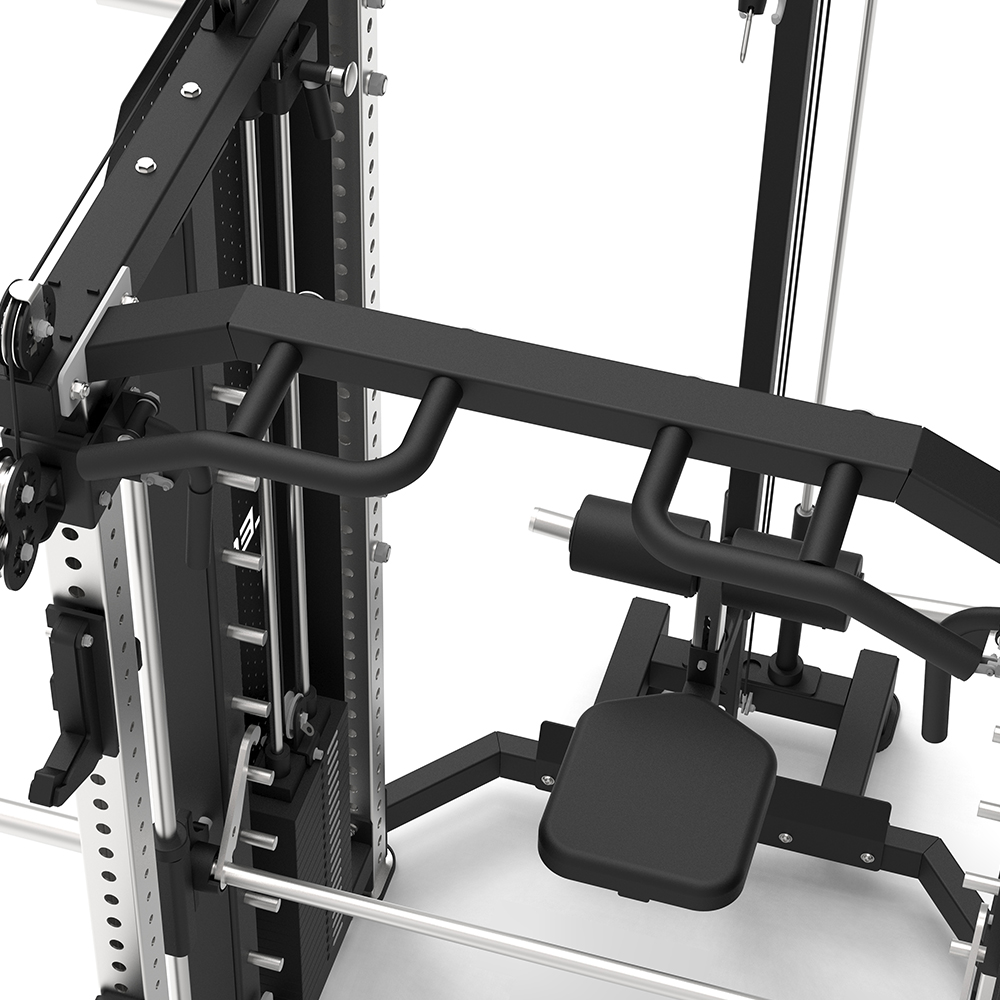
The dedicated high and low pull seat is another ergonomic refinement. It is precisely positioned to align with the cable anchor points, providing proper body support and biomechanical form. The foam leg holders on the seat, combined with the rowing footplate, create a locked-in position for lat pulldowns, seated rows, and triceps pushdowns, ensuring the target muscles do the work, not stabilizers fighting for balance.
Beyond the core Smith and cable functions, this system integrates several specialized training zones that significantly expand its exercise library. The centerpiece of the upper body station is the Φ32 multi-angle pull-up handles. The 32mm diameter is a carefully chosen standard, offering a grip that is neither too thin (which causes hand fatigue) nor too thick (which compromises grip strength).
The multi-angle design is key, featuring neutral, wide, and close grip positions. This allows users to target different back muscles—from the latissimus dorsi with wide overhand grips to the brachialis and biceps with close neutral grips. The ergonomic, non-slip texture on the handles ensures a secure hold even during high-volume training or when palms become sweaty, enhancing user confidence and reducing the risk of slipping.
Landmine attachments have become a staple of functional training, and this system incorporates one directly into the frame. The landmine allows for a vast array of exercises including T-bar rows, rotational core work, single-leg squats, and shoulder warm-ups. Its integration saves floor space and provides a solid anchor point that does not slide or shift during heavy pulls.
Paired with the landmine is the rowing footplate, which is not just for seated cable rows. The footplate features multiple stance options, allowing users to perform standing landmine presses, split-stance rows, or even use it as a stable base for Smith machine shrugs. The multiple textured positions accommodate various hip widths and training stances, promoting proper alignment for exercises like deadlifts and bent-over rows. This thoughtful combination turns a simple attachment into a cornerstone of a functional training program, covering everything from explosive power to rotational stability.
A major pain point for any training environment is the storage of weight plates, bars, and accessories. Cluttered floors are not only inefficient but dangerous. This system addresses this through a modular design that prioritizes storage integration. The frame includes integrated weight horns (pegs) designed to hold Olympic weight plates. This feature leverages the rack’s own footprint, eliminating the need for a separate weight tree and freeing up valuable floor space.
Furthermore, the system is built for DIY compatibility and future expansion. The 3mm uprights use a standard hole spacing pattern, meaning they are compatible with a wide range of third-party attachments, such as dip bars, leg rollers, and additional storage shelving. This future-proofs the investment, allowing the owner to customize the rig as their training needs evolve. The “no extra storage rack required” claim is a significant advantage for home gym owners where every square foot counts, and for commercial facilities looking to maintain a clean, organized floor plan.
The following table consolidates the verifiable and qualitatively derived specifications of the All-in-One Functional Training System. Where specific numerical values were not provided, professional industry descriptors are used to maintain accuracy and authority.
| Specification Category | Technical Details |
|---|---|
| Frame Material | Heavy-duty structural steel, F75×3mm thickened square tubing on all four uprights |
| Smith Machine Guide Rods | 30mm solid steel guide rods, engineered for zero lateral play |
| Pulley System | Precision aluminum body with commercial-grade bearings, ultra-smooth and silent operation |
| Cable Mechanics | Linear rebound engineering eliminates empty stroke, providing immediate load engagement |
| Pull-Up Bar | Φ32mm multi-angle ergonomic handles with non-slip grip texture |
| Training Attachments | Integrated landmine, dedicated high/low pull seat, rowing footplate with multiple stances |
| Safety System | Sandwich hooks, safety catch hooks for Smith rods, adjustable spotter arms for free weights |
| Storage & Customization | Integrated weight horns, modular design for DIY compatibility, no external storage required |
| Load Compatibility | Plate-loaded system, compatible with standard Olympic weight plates |
| Intended Use | Commercial-grade, designed for high-frequency use in facilities and serious home gyms |
In conclusion, the All-in-One Functional Training System transcends the typical multifunction trainer by prioritizing structural integrity, mechanical precision, and user-focused safety. From the 3mm steel frame and 30mm Smith guide rods to the aluminum-bearing pulleys and linear rebound cable engineering, every component is selected for longevity and performance. The thoughtful integration of a landmine, multi-grip pull-up bar, dedicated cable seat, and integrated storage creates a truly comprehensive solution that optimizes space without sacrificing functionality. For the discerning athlete or facility manager, this system represents a significant investment in durable, high-performance training infrastructure.
| Specification Category | Technical Details |
|---|---|
| Frame Construction | F75×3mm thickened square tubing, four-upright design, heavy-duty steel |
| Smith Guide Rods | 30mm chrome-plated, zero-offset certification, safety catch hooks integrated |
| Pulley System | Premium aluminum body, precision sealed bearings, linear rebound elimination |
| Pull-Up Bar | Φ32 multi-angle handles, micro-textured knurling, multiple grip positions |
| Leg Developer | Pivot-arm design with cam profile, needle bearings, adjustable foam rollers |
| Weight Capacity | Heavy-duty commercial specification, dynamic load tested without deflection |
| Plate Storage | Integrated weight horns, 7-degree upward angle, standard 50mm compatibility |
| Safety System | Spring-loaded catch pawls, spotter arms (250kg static), rotating safety hooks |
| Finish | Abrasive blasted, zinc phosphate conversion, electrostatic powder coat |
| Dimensions (L×W×H) | 1.8m × 2.2m base footprint, space-optimized design |