
Why Frame Thickness and Weld Quality Matter in Heavy-Duty Equipment
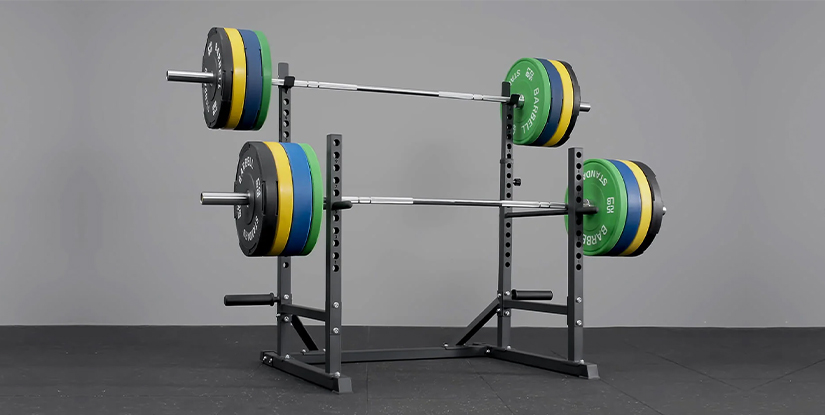
The Invisible Threat: Structural Fatigue and Frame Failure
In high-intensity operational environments, the difference between a reliable piece of equipment and a catastrophic failure often comes down to dimensions that are impossible to see with the naked eye: frame thickness and weld penetration. Operators frequently encounter the frustration of equipment that feels stable during initial use but begins to exhibit micro-oscillations or structural 'give' after only a few months of heavy loading. This is rarely a result of misuse, but rather a fundamental deficiency in the core structural engineering.
When a frame lacks sufficient gauge or possesses substandard weld integrity, the equipment suffers from accelerated fatigue. A frame that is too thin cannot effectively distribute kinetic energy across its surface area, leading to localized stress concentrations. Similarly, a weak weld creates a 'hinge effect' at the joints, where the material is most vulnerable to shearing forces. Understanding these nuances is the first step in moving from reactive replacement to proactive procurement and maintenance.
Identifying Early Warning Signs of Structural Deficit
Operators should not wait for a visible fracture to occur. Early detection of structural degradation involves monitoring subtle changes in the equipment's performance profile. Common indicators include:
- Increased Vibration: If a machine or rack begins to vibrate more aggressively during standard cycles, it often suggests that the frame's rigidity has decreased due to micro-cracks in the welds.
- Audible Creaking: High-pitched or metallic grinding sounds often indicate that structural components are shifting under load, signaling a loss of joint integrity.
- Deformation: Visible bowing or twisting in long-span members is a definitive sign that the material thickness is insufficient for the operational load requirements.
The Physics of Material Gauge: Why Thickness Determines Longevity
The thickness of a metal frame—often referred to as the gauge—is the primary determinant of its load-bearing capacity and torsional rigidity. A common mistake in procurement is focusing solely on the weight of the equipment rather than the wall thickness of the tubing or plating used. A heavy piece of equipment might be heavy due to solid plates, whereas a high-performance piece of equipment is often heavy due to high-gauge, thick-walled hollow steel tubing designed for maximum strength-to-weight efficiency.
When the material is too thin, the frame undergoes 'elastic deformation' more easily. While some flexibility is necessary to absorb impact, excessive flexibility leads to permanent 'plastic deformation,' where the metal is stretched beyond its ability to return to its original shape. This is particularly dangerous in equipment subject to repetitive, rhythmic loading.
| Material Thickness (Gauge) | Common Application | Failure Risk Profile |
|---|---|---|
| Low (14-16 Gauge) | Light commercial / Residential | High risk of buckling under dynamic loads; prone to denting. |
| Standard (11-12 Gauge) | Standard Commercial Grade | Reliable for consistent loads; requires inspection for weld fatigue. |
| Heavy-Duty (7-10 Gauge) | Industrial / High-Impact | Minimal deformation risk; requires high-precision welding to prevent overheating. |
Weld Quality: The Critical Link Between Components
If the frame thickness provides the muscle, the welds provide the connective tissue. A frame composed of thick-gauge steel is only as strong as its weakest joint. In many cases, manufacturers use high-quality steel but fail in the welding and thermal management process, resulting in a structure that is deceptively fragile.
The Danger of Surface-Level Welds
A common failure mode in lower-tier manufacturing is the 'cosmetic weld.' This occurs when a welder applies a bead that looks aesthetically pleasing on the surface but lacks deep penetration into the base metal. This creates a brittle interface that can snap instantly under lateral or shear stress. High-quality welds must achieve a complete fusion with the parent material, often requiring specialized techniques like TIG (Tungsten Inert Gas) or high-amperage MIG (Metal Inert Gas) welding to ensure the heat penetrates the full depth of the metal thickness.
Common Weld Defects to Inspect
Operators should perform visual inspections of all joints using a bright light source. Look for the following defects:
- Porosity: Small holes or cavities in the weld bead, often caused by contaminated metal or improper gas shielding. These act as stress concentrators.
- Undercutting: A groove melted into the base metal adjacent to the weld toe. This effectively reduces the wall thickness of the tube at the joint, making it a prime location for cracks.
- Lack of Fusion: When the weld metal does not actually 'wet' or bond with the frame, leaving a microscopic gap that eventually expands under vibration.
Debunking the Weight-to-Strength Myth
A pervasive misconception among equipment buyers is that 'heavier equals stronger.' While mass is a factor in stability, it is not a reliable proxy for structural integrity. A frame can be extremely heavy due to the use of dense, low-grade cast iron or thick, low-quality plating, yet still lack the structural rigidity provided by a precisely welded, medium-gauge steel frame.
The goal of high-end equipment design is not maximum weight, but maximum structural stiffness. This is achieved through the strategic placement of gussets, cross-bracing, and high-penetration welds. A professional buyer should prioritize specification sheets that list the actual wall thickness (in mm or gauge) and the type of welding process used, rather than just the total weight of the unit.
Comparison: Mass vs. Rigidity
To illustrate this, consider the following comparison between two types of industrial frames:
| Feature | Mass-Optimized (Low Rigidity) | Rigidity-Optimized (High Rigidity) |
|---|---|---|
| Primary Construction | Heavy, thick plating/cast parts | High-gauge, precision-welded tubing |
| Joinery Method | Bolted or surface-welded joints | Deep-penetration, full-circumference welds |
| Performance Under Load | High stability, but prone to 'sway' | High stability with zero lateral deflection |
| Failure Mode | Structural bending/warping | Localized fatigue cracks (predictable) |