
From Raw Rubber to Bumper Plates——A Manufacturing Deep Dive
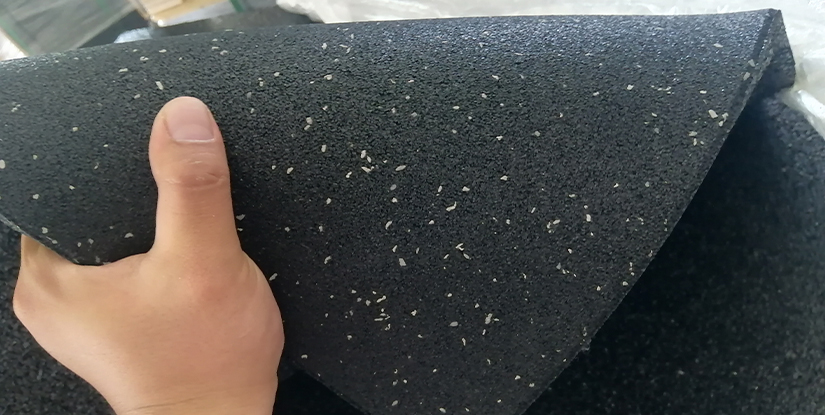
The Foundation: Selecting High-Grade Raw Rubber and Compounds
The production of a professional-grade bumper plate begins long before a single mold is filled. The primary challenge for manufacturers is achieving the perfect balance between high density, impact absorption, and durability. If the material composition is incorrect, the plate will either be too brittle (leading to cracking under temperature changes) or too soft (causing permanent deformation after heavy drops).
The Role of Synthetic and Natural Rubber
Most premium bumper plates utilize a blend of high-density synthetic rubber, such as EPDM (Ethylene Propylene Diene Monomer), and natural rubber. EPDM is highly valued in the industry for its exceptional resistance to UV radiation, ozone, and weather elements, ensuring that plates used in outdoor functional fitness environments do not degrade rapidly. The addition of specific additives determines the 'rebound' characteristic of the plate—how much energy it returns to the floor upon impact.
Filler Integration and Density Control
To achieve the specific weights required for standard plate increments (e.g., 10kg, 20kg, 25kg), manufacturers must utilize high-density fillers. Calcium carbonate or specialized mineral fillers are often used to increase mass without compromising the elasticity of the rubber. A common mistake in lower-tier manufacturing is using excessive low-cost fillers, which results in a plate that feels 'hollow' or lacks the consistent density required for high-performance training.
| Material Component | Primary Function | Effect of Poor Quality |
|---|---|---|
| EPDM / Synthetic Rubber | Elasticity and Durability | Cracking or brittle failure |
| Mineral Fillers | Weight Density | Inconsistent weight tolerances |
| Plasticizers | Flexibility | Hardening/Stiffening over time |
| UV Stabilizers | Environmental Resistance | Surface degradation and color fading |
The Compounding Phase: Creating the Perfect Polymer Blend
Once the raw materials are selected, the focus shifts to the compounding process. This is a critical stage where the disparate elements of rubber, oils, and fillers are homogenized into a single, workable mass. The difficulty here lies in the viscosity of the mixture; if the blend is not perfectly uniform, the finished bumper plate will exhibit 'soft spots' or uneven density distributions.
High-Shear Mixing and Homogenization
Manufacturers utilize high-shear internal mixers to force the rubber components and additives into a cohesive state. This process requires precise temperature control. If the mixing temperature rises too high, the rubber may begin to partially vulcanize (a process known as 'scorching') before it even reaches the mold, rendering the batch useless. Operators must monitor the shear force and temperature continuously to ensure a consistent viscosity.
The Importance of Chemical Vulcanization Agents
To transform the rubber from a plastic-like state to an elastic state, vulcanization agents (typically sulfur-based or peroxide-based) are introduced. This chemical reaction creates cross-links between polymer chains, providing the plate with its 'memory'—the ability to return to its original shape after being dropped. Without precise measurement of these agents, the plates may lack the necessary structural integrity for heavy Olympic lifting.
Precision Molding: Shaping the Bumper Plate
The transition from a pliable rubber mass to a solid, heavy-duty bumper plate occurs within the molding stage. This is where the geometric precision of the plate is finalized. The main problem encountered during this phase is 'flash'—excess material that leaks from the mold seams—and inconsistent thickness across the plate's surface.
Compression Molding vs. Injection Molding
Most professional bumper plates are produced via compression molding. In this process, a pre-weighed 'slug' of the rubber compound is placed into a heated steel mold. A massive hydraulic press then applies thousands of pounds of pressure to force the rubber into every corner of the mold cavity. This method is preferred for high-density plates because it allows for better control over the density of the thick rubber sections.
The Steel Inner Ring Integration
A critical component of the bumper plate is the internal steel ring, which provides the structural core and the mounting point for the central bore. The integration of this ring is a high-risk step. If the rubber is not perfectly compressed around the steel ring, the plate may suffer from 'delamination'—where the rubber separates from the metal core after repeated use. To prevent this, the steel ring is often pre-heated or treated with a bonding agent to ensure a seamless molecular bond with the rubber during the compression cycle.
Verification of Dimensional Accuracy
Post-molding, each plate must undergo strict dimensional verification. Operators use digital calipers to measure the thickness, diameter, and, most importantly, the central bore diameter. The bore must be perfectly concentric to ensure the plate sits squarely on the barbell without wobbling. A common defect is a 'tapered' bore, which can damage high-end Olympic barbells over time.
Quality Control: Verifying Weight and Impact Resilience
The ultimate utility of a bumper plate is its predictability. A lifter needs to know that a 25kg plate actually weighs 25kg, and that it will absorb impact without shattering. Quality control (QC) is not a single event but a multi-stage verification process that spans the entire production lifecycle.
Tolerance Testing for Weight and Dimensions
Commercial-grade bumper plates are held to strict weight tolerances. A common industry benchmark is a +/- 1% to 3% variance. To verify this, manufacturers use high-precision industrial scales. If a batch falls outside of the specified tolerance, it indicates an issue during the 'slug' weighing stage or an inconsistency in the filler density during compounding. Technical operators must audit the weighing logs to identify exactly where the deviation occurred.
Impact and Bounce Testing
A high-quality bumper plate must demonstrate consistent 'rebound' characteristics. If the plate is too bouncy, it can become unpredictable during heavy sets; if it is too dead, it indicates poor material density. Operators conduct controlled drop tests from set heights to monitor the bounce height and the way the plate settles. This ensures that the rubber's elasticity is within the engineered parameters.
| Testing Metric | Goal/Standard | Failure Indicator |
|---|---|---|
| Weight Tolerance | Within +/- 2% of target | Inconsistent density or incorrect slug mass |
| Bore Centricity | Perfectly concentric to core | Wobble on barbell or uneven wear |
| Surface Hardness | Consistent Shore A hardness | Soft spots or surface cracking |
| Color Uniformity | Consistent pigment distribution | Streaks or blotchy appearance |
Common Manufacturing Defects and Mitigation Strategies
Even in highly automated facilities, certain defects can arise due to environmental factors or mechanical fatigue. Understanding these failures allows operators to implement preemptive fixes.
Addressing Surface Imperfections and Bubbles
One of the most common visual defects is 'surface pitting' or air bubbles. This is almost always caused by air being trapped within the rubber compound during the mixing or molding phase. To fix this, operators can implement vacuum degassing during the compounding stage, which pulls air out of the rubber mass before it enters the mold. This ensures a dense, bubble-free surface finish.
Preventing Cracking and Structural Failure
If a plate exhibits cracking after only a few months of use, the cause is likely 'thermal fatigue' or improper vulcanization. If the plate was not heated sufficiently during molding, the polymer chains did not fully cross-link. To verify the cause, operators should inspect the cross-section of a failed plate; a granular or uneven interior structure is a clear sign of under-vulcanization. The fix is to recalibrate the heat cycles and moisture levels in the compression mold.
Maintenance and Longevity in Commercial Environments
For gym owners and equipment operators, the lifecycle of a bumper plate is determined by how it is treated and stored. While the manufacturing process provides the durability, operational habits dictate the actual lifespan of the product.
Optimal Storage and Environmental Control
While EPDM-based plates are resistant to the elements, extreme temperature fluctuations can still affect their longevity. For example, storing plates in a high-heat environment can accelerate the depletion of plasticizers, causing the rubber to harden and crack prematurely. We recommend storing plates in a controlled-temperature environment whenever possible to maintain the material's natural elasticity.
Inspection Protocols for Commercial Facilities
Facility managers should implement a quarterly inspection routine. This involves checking for any signs of 'separation' between the rubber and the internal steel ring. If a plate begins to feel unbalanced or shows an uneven circumference, it is a sign that the internal structure is failing. Regular cleaning with a damp cloth—avoiding harsh petroleum-based solvents—will also preserve the surface integrity and prevent UV-induced degradation.
Meeting Global Standards and Final Inspection
To compete on a global scale, manufacturers must adhere to rigorous international standards for weight, density, and safety. The final stage of the manufacturing deep dive involves a comprehensive audit of the entire production batch to ensure that every unit meets the pre-defined specifications for elite athletic training.
Compliance and Certification
High-end bumper plate manufacturers often strive for compliance with various strength equipment standards. This involves rigorous documentation of material origins, chemical safety (ensuring no heavy metals or toxic phthalates), and dimensional consistency. A manufacturer's ability to provide a 'Certificate of Analysis' for their rubber compound is a strong indicator of a professional-grade production facility.
Final Packaging and Quality Assurance Sign-off
Before the plates leave the factory, they undergo a final inspection. This isn't just a visual check; it includes a weight verification of the finished unit and a final pass through a quality-check sensor to detect any micro-cracks or surface anomalies. Once the batch passes these final benchmarks, it is cleared for shipping, ensuring that the strength professional receives a tool that is as predictable as it is durable.