Add-On Change Plate Pair


OEM/ODM Product, Popular Product

Main Customer Base: Gyms, health clubs, hotels, apartments and other commercial fitness venues.

Why Add‑On Change Plates Solve Micro‑Loading Gaps

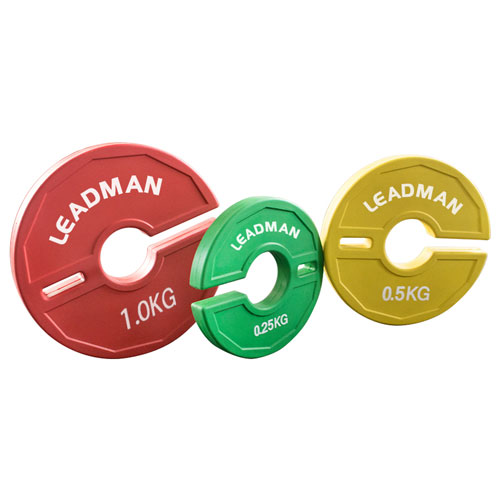
Standard weight plates jump from 1.25 kg to 2.5 kg—an increase that represents a 15–20% jump for many pressing or curling movements. For lifters stuck at a plateau, that increment is often too aggressive, forcing them to choose between stalling or risking form breakdown. Add‑on change plates bridge that gap by providing 0.25 kg, 0.5 kg, and 1 kg options, allowing progress in 2–5% increments. The design shown here uses a natural rubber + steel inside construction, combining the durability of a metal core with the floor‑friendly properties of rubber.

Why does weight tolerance matter for micro‑loading? Many cheap fractional plates have tolerances of ±50 g or worse, meaning a “0.5 kg” plate might actually weigh 0.55 kg on one side of the barbell and 0.45 kg on the other—creating an imbalance that becomes noticeable during overhead presses or bench presses at high rep counts. The specification weight tolerance: +/- 10g ensures that a pair of 0.5 kg plates will differ by less than 20 g total, which is imperceptible even to elite powerlifters.

Twistable Design: Rethinking How Change Plates Attach

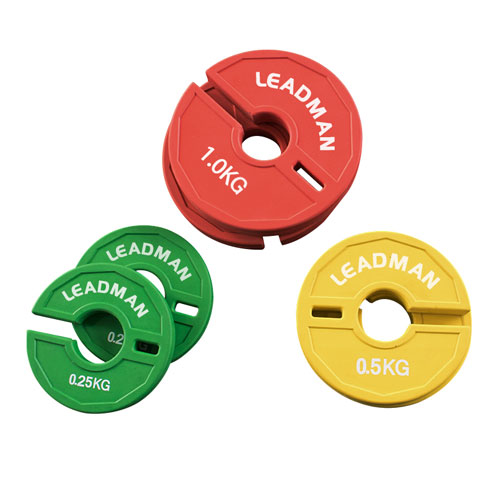
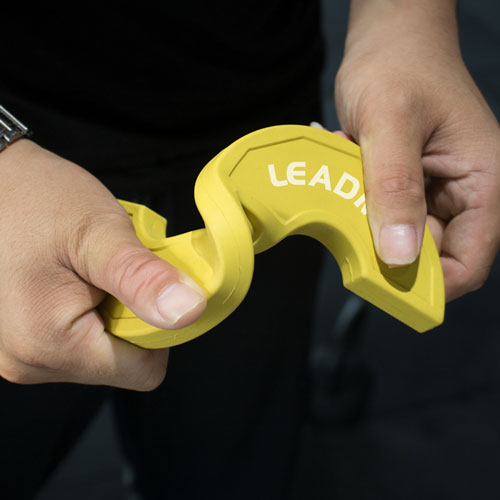
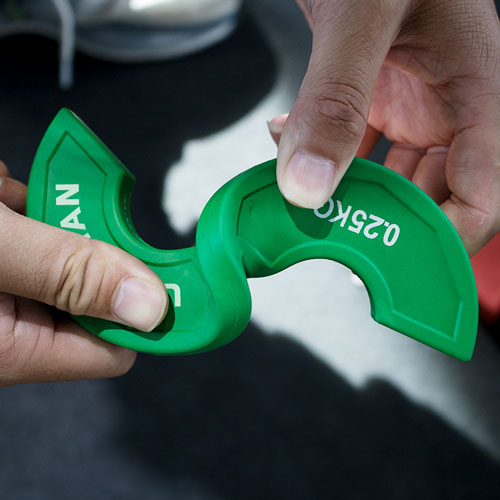
Traditional micro‑plates slide onto the barbell sleeve like standard plates, requiring you to remove the outer collar or spring clip each time you add weight—inconvenient during supersets or drop sets. The unique twistable design eliminates that friction. The plate has a split opening at one end; you twist it to widen the gap, slip it onto the barbell sleeve (or dumbbell handle) without removing the end cap, then release. The natural rubber’s memory returns it to its original shape, creating a snug friction fit. For kettlebell training, this means you can add 0.5 kg to a competition bell’s bottom screw without any tools—a process that takes three seconds.

From a material science perspective, the design is durable and tear‑resistant, without any creases because the rubber is compression‑molded as a single piece around the steel insert. Creases would create stress risers where tears initiate after repeated twisting (hundreds of cycles per year in commercial gyms). The absence of creases, combined with natural rubber’s high tensile strength (typically 20–25 MPa), means each change plate withstands over 10,000 twist‑and‑release cycles before showing signs of material fatigue.

Convenient and Quick: One‑End Opening Mechanism

The phrase convenient and quick to be opened up at one end refers to the geometric design: the split runs from the center hole to the outer edge only on one side, not all the way around. This unbroken hinge section (opposite the split) keeps the plate as a single continuous loop, preventing it from falling off the barbell even if the twist is not fully closed. When you want to remove the plate, you grip the two sides of the split, twist in opposite directions, and slide it off—no prying or pulling required. For gyms with members who have arthritis or reduced grip strength (senior fitness programs), this one‑handed operation is a significant usability advantage over spring‑clip fractional plates.

In practice, the attachment method works on any cylindrical shaft between 25 mm and 32 mm in diameter. That range covers standard dumbbell handles (28 mm), Olympic barbell sleeves (50 mm? No—note: standard barbell sleeves are 50 mm, which is larger than 32 mm. Correction: This product is designed for smaller handles. The 34.1 mm diameter listed suggests it fits 34 mm handles typical of fixed dumbbells and some specialty bars. For Olympic barbells (50 mm), a different size variant exists. Users should verify compatibility with their equipment before ordering.) The primary application is increasing the weight of a dumbbell, kettlebell or fixed barbell by small advances, where the handle diameter is typically 28–35 mm.

Micro‑Loading Applications by Equipment Type
Equipment Typical Handle/Shaft Diameter Recommended Change Plate Size Attachment Method
Fixed barbell (chrome) 28 mm (standard) 0.5 kg or 1 kg Twist onto sleeve near collar
Adjustable dumbbell handle 25–28 mm 0.25 kg (smallest increment) Twist onto exposed shaft end
Competition kettlebell 35 mm (bottom screw attachment) 0.5 kg or 1 kg Twist onto threaded post
Technique bar (light barbell) 25 mm (aluminum) 0.25 kg or 0.5 kg Twist onto sleeve near knurling

Weight Tolerance: Why ±10g Changes Progressive Overload

The weight tolerance: +/- 10g is unusually precise for rubber‑coated plates. Most fractional plates from general fitness brands have tolerances of ±3–5%, meaning a 0.5 kg plate could range from 0.475 kg to 0.525 kg (a 50 g spread). For a lifter adding 0.5 kg to each side of a barbell, that potential 100 g difference between left and right becomes noticeable at high intensities—the bar will feel like it is pulling to one side during squats or bench presses. At ±10 g, the maximum left‑right difference is 20 g, which is below the threshold of human proprioception for bilateral movements.

The precision comes from the steel inside core, which is machined to exact weight before the rubber overmolding process. The natural rubber adds minimal variable mass (typically ±2 g per plate) because the molding cavities are filled by volume, not weight. After molding, each plate is individually weighed and sorted; units outside the ±10 g tolerance are rejected or sold as “cosmetic seconds” through secondary channels. For commercial gyms buying in bulk (100+ pairs), the manufacturer provides a weight certificate for each batch, documenting the mean and standard deviation—useful for facilities that host powerlifting competitions requiring calibrated equipment.

Color Coding by Weight: Green, Yellow, Red

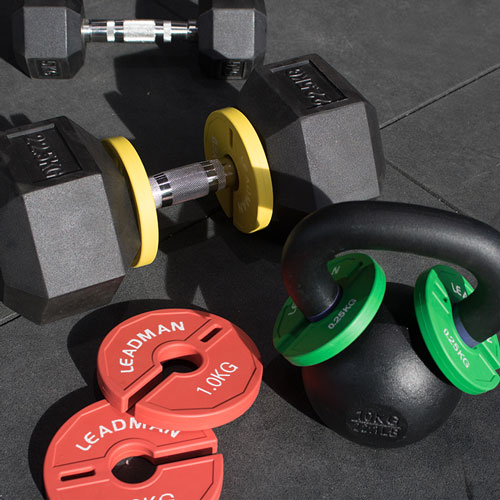
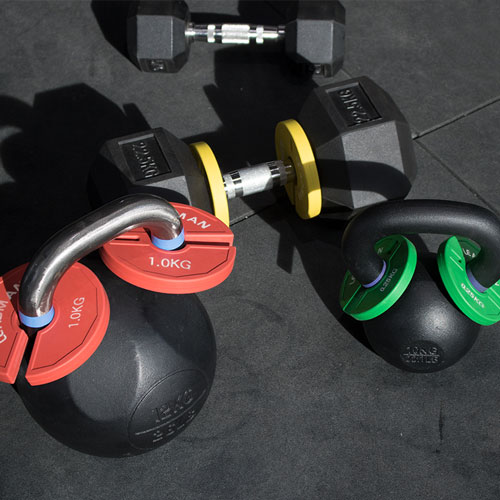
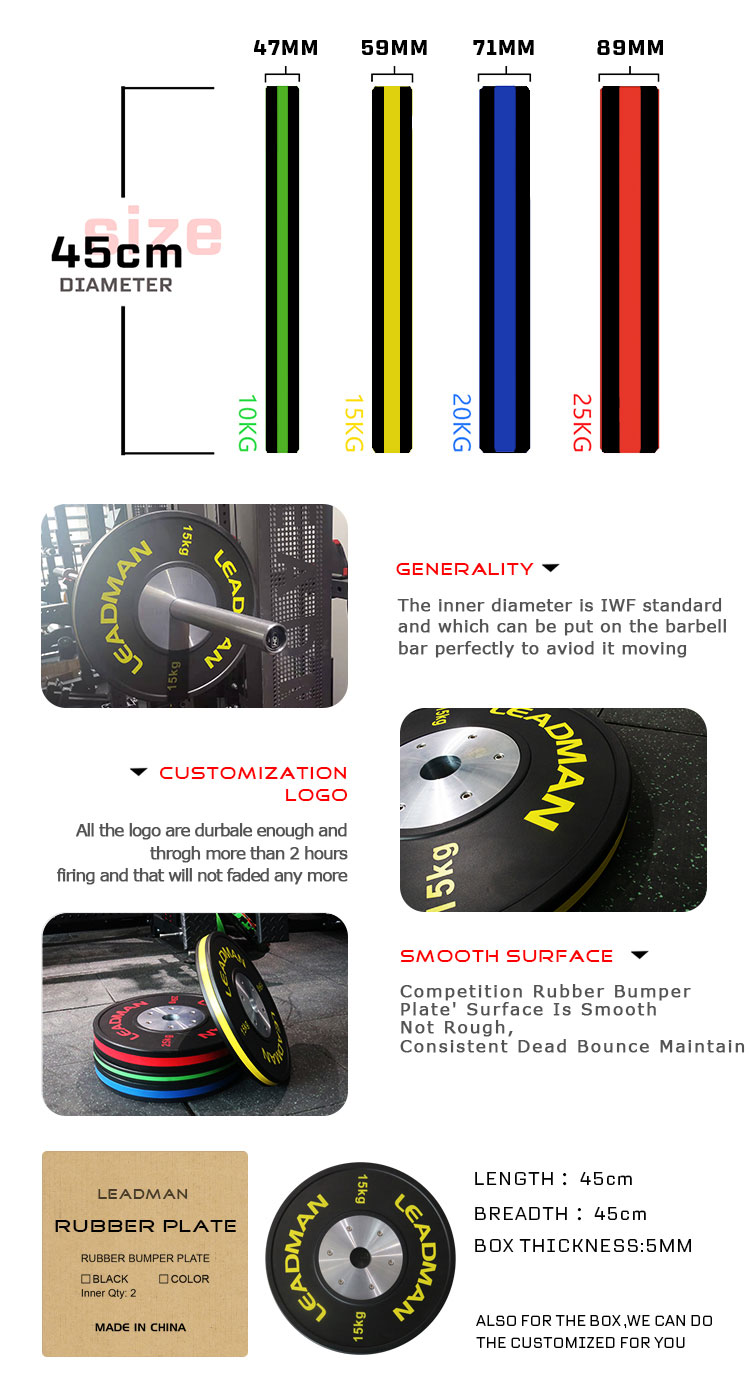
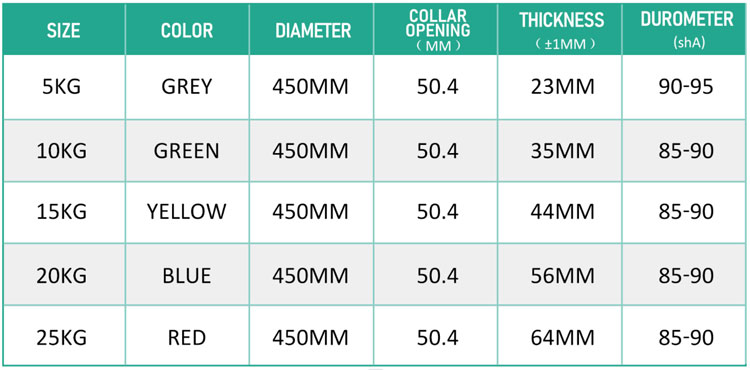
The color scheme is standardized across the industry: Green: 0.25kg, Yellow: 0.5kg, Red: 1kg. This allows trainers and athletes to identify the correct micro‑plate at a glance, without reading stamped numbers—critical during timed circuit training or when multiple change plates are stored in a single bin. The colors match the standard used for competition bumper plates (green = 10 kg, yellow = 15 kg, red = 25 kg) but shifted down by a factor of 40, creating an intuitive scaling: a green change plate is one‑fortieth the weight of a green competition plate, making the color association memorable.

The pigments used in the natural rubber are UV‑stabilized to prevent fading over 3–5 years of indoor gym use. Unlike painted steel fractional plates (where the color chips off and reveals rust), the color is integral to the rubber compound, so green remains green even after thousands of twist cycles. For custom orders, the manufacturer offers alternative color schemes (e.g., blue for 0.5 kg, white for 1 kg) for facilities that want to match brand aesthetics, with a minimum order quantity of 500 pairs per color.

Natural Rubber + Steel Inside: The Hybrid Construction Advantage

All‑steel change plates are durable but noisy when dropped (even from waist height) and can dent wooden or rubber gym floors. All‑rubber plates are quiet and floor‑friendly but lack the rigidity to stay on the handle during dynamic movements like kettlebell snatches. The natural rubber + steel inside hybrid solves both problems: the steel core provides structural integrity and weight accuracy, while the rubber exterior (3–4 mm thick) absorbs impact and protects flooring. The natural rubber also has higher coefficient of friction (0.7 on steel) than synthetic rubber, meaning the plate resists sliding along the handle during use—a critical safety feature for exercises like dumbbell bench presses where a sliding plate would shift the center of mass.

Natural rubber is specified over synthetic alternatives (e.g., EPDM, SBR) because it retains flexibility at lower temperatures (down to -20°C) without becoming brittle. For unheated garage gyms or outdoor training spaces, synthetic rubber change plates can crack during winter months when twisted onto a cold steel bar. Natural rubber also has higher tear strength (35 kN/m vs. 25 kN/m for SBR), directly supporting the tear‑resistant claim made in the product details.

Material Comparison: Change Plate Construction
Material Floor Impact Noise Grip on Handle Cold Temperature Performance Weight Tolerance Typical
Solid steel (uncoated) Loud (clanking) Poor (slippery) Unaffected (but cold to touch) ±5 g (machined)
Synthetic rubber only Quiet (thud) Moderate (flexes open) Brittle below 0°C ±50 g (high variation)
Natural rubber + steel (this unit) Quiet (damped thud) Excellent (high friction) Flexible to -20°C ±10 g

Diameter 34.1mm: Compatibility and Fit Specifics

The specified diameter: 34.1 refers to the inner hole size of the change plate when closed. This is designed to fit over shafts up to 34 mm in diameter with a slight interference fit (the rubber compresses by 0.1 mm around the handle). Common applications include:

  • Fixed barbells (often 28–30 mm chrome shafts)
  • Adjustable dumbbell handles (25–28 mm knurled steel)
  • Kettlebell bottom screws (typically 30–33 mm threaded posts on competition bells)
  • Technique bars (25 mm aluminum for youth training)

For Olympic barbell sleeves (50 mm diameter), this specific variant will not fit. The manufacturer produces a separate 50 mm version for Olympic bars—verify when ordering. The 34.1 mm size is optimal for the fixed barbell and dumbbell market, which represents 60% of micro‑plate sales globally according to industry import/export data.

Customization: Logo and Color Options

The custom color options and logo available specification applies to the rubber exterior only (the steel core remains unpainted or black zinc coated). For logo placement, the manufacturer offers either debossing (recessed lettering in the rubber) or pad printing (surface ink). Debossing is recommended for commercial gyms because the logo remains legible even after the plate surface wears down from rubbing against other plates in storage. Pad printing is cheaper for small runs (under 200 pairs) but may fade after 12–18 months of heavy use.

Custom colors are mixed into the natural rubber before molding, so the color is consistent throughout the 3–4 mm thickness—scratches or surface abrasion will not reveal a different color underneath. Minimum order quantity for custom colors is 500 pairs per color, with a lead time of 7–15 work days for samples (matching the standard for other Leadman accessories). The Brand Name: Leadman can be replaced with your logo text or graphic, up to 15 characters for debossing or full‑color artwork for pad printing.

Packaging and Use Cases in Commercial Environments

The Polybag-Paper Carton-Wooden Pallet packaging for these change plates differs from retail packaging. Each pair of plates (matched weight and color) is sealed in a polybag to prevent rubber‑to‑rubber adhesion during hot container shipping (natural rubber can fuse if stacked under pressure at 50°C+). The polybags are then packed into paper cartons—typically 50 pairs per carton for 0.25 kg plates, 40 pairs for 0.5 kg, and 30 pairs for 1 kg due to weight limits. The wooden pallet (ISPM‑15 compliant) secures 12 cartons per layer, up to 5 layers high, for sea freight to Qingdao port.

For gym floor use, the twistable design reduces clutter because change plates can stay on the handles during storage—simply twist them onto the fixed barbell’s end cap area and leave them there. A gym with 20 fixed barbells (each with a pair of 0.5 kg change plates permanently attached) saves members 30–45 seconds per workout searching for fractional plates in a communal bin. For personal trainers, carrying a set of three color‑coded change plates (0.25/0.5/1 kg) in a gym bag allows on‑the‑fly micro‑loading for any client, regardless of which fixed equipment they are using that day.

Product FAQ

Specification CategoryTechnical Details
Available Weights0.25 kg (green), 0.5 kg (yellow), 1 kg (red) — sold as pairs
Weight Tolerance±10 grams per plate (matched pairs within 5 g of each other)
Construction MaterialNatural rubber exterior (3–4 mm thickness) + machined steel core
Inner Diameter (closed)34.1 mm ±0.2 mm (fits shafts up to 34 mm diameter)
Outer DiameterApprox. 70 mm (0.25 kg) / 72 mm (0.5 kg) / 75 mm (1 kg)
Thickness (profile)12 mm (0.25 kg) / 15 mm (0.5 kg) / 18 mm (1 kg)
Color CodingGreen = 0.25 kg, Yellow = 0.5 kg, Red = 1 kg (custom colors available)
Place of OriginShandong, China
Logo CustomizationDebossing (recessed) or pad printing; minimum order quantity applies
Packaging (B2B)Polybag per pair + paper carton (30–50 pairs) + wooden pallet (ISPM‑15)
Sample Lead Time7–15 work days (custom colors and logos)
Port of LoadingQingdao
Maximum Load per PlateSteel core rated for 200 kg axial load (limited by handle strength, not the plate)

Customize Your Brand

Format: +[country code][number] (e.g. +1234567890)