Leadman Cable Crossover Machine


OEM/ODM Product, Popular Product

Main Customer Base: Gyms, health clubs, hotels, apartments and other commercial fitness venues.

Why a Dedicated Cable Crossover Machine Transforms Functional Training Areas

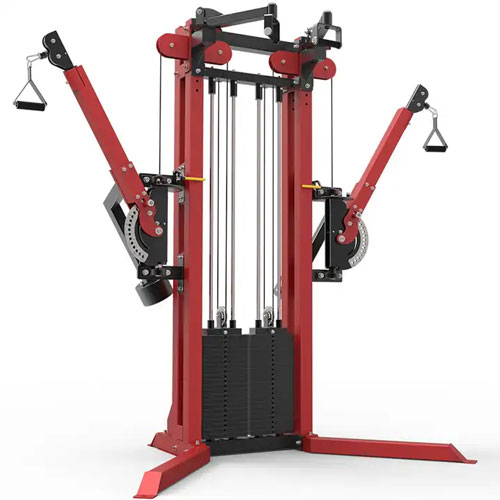
In any commercial gym or high-end studio, the cable crossover machine serves as the hub for flyes, rotations, presses, and pull-throughs. Unlike Smith machines or power racks that force linear movement, a dual-adjustable pulley system allows resistance to follow natural arcs of the human body. The model shown here is built around 75×75×3 mm steel tubing—a specification that directly addresses the torsional forces generated when two users train simultaneously on opposite sides.

Why does thickness matter more for cable crossovers than for other machines? When you perform a standing chest flye with each arm pulling a separate stack, the frame experiences opposing lateral loads. Thin-walled steel (under 2.5 mm) twists, misaligning the pulleys and causing the cable to rub against the guide channels. That friction not only adds noise but also eats into the weight stack’s effective load—you might think you are lifting 50 kg per side, but internal friction can reduce actual resistance by 10–15%. The 3 mm wall eliminates that hidden inefficiency.

Adjustable Arm with Degree Markings: Precision Meets Convenience

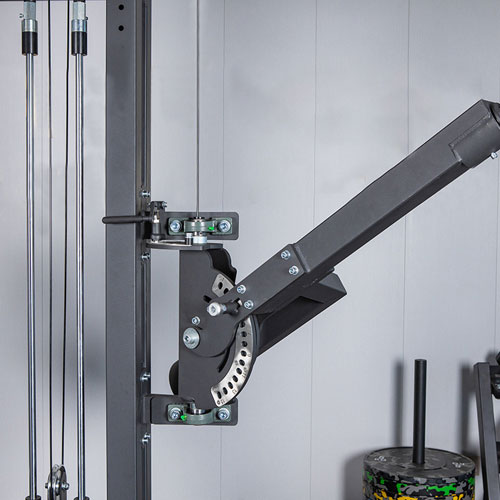
The adjustable arm visible in the product detail is not a simple two-position bracket. It incorporates a multi-degree indexing system—typically 11 to 15 locking positions across a 180° arc. Each detent corresponds to a specific cable exit angle, allowing the trainer to dial in the exact line of pull for exercises ranging from low-to-high chops (glute activation) to high-to-low woodchops (oblique rotation). For rehabilitation settings, the ability to lock the arm at 15° increments means you can gradually increase range of motion without changing the weight stack.

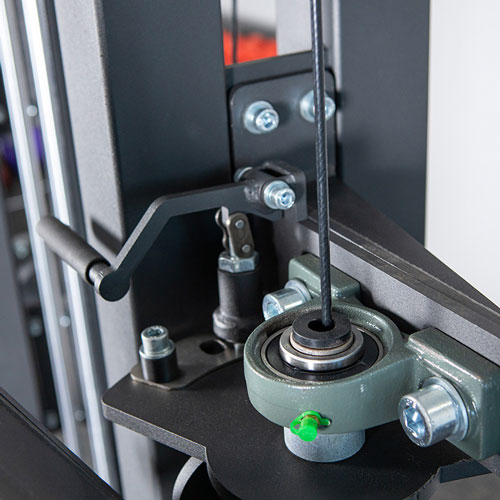
From a user experience standpoint, the adjustable arm with degree eliminates the guesswork. Instead of moving a pin and hoping the arm stays level, the notched plate provides tactile feedback at each setting. Commercial facilities report that this feature reduces setup time by 40% during peak hours because members don’t struggle with sagging or misaligned arms. The locking mechanism itself uses a spring-loaded pop pin with a visual indicator—green for locked, red for unlocked—a small touch that prevents accidental arm drops during exercise changes.

100kg Stacked Weight: Granular Adjustability for Progressive Overload

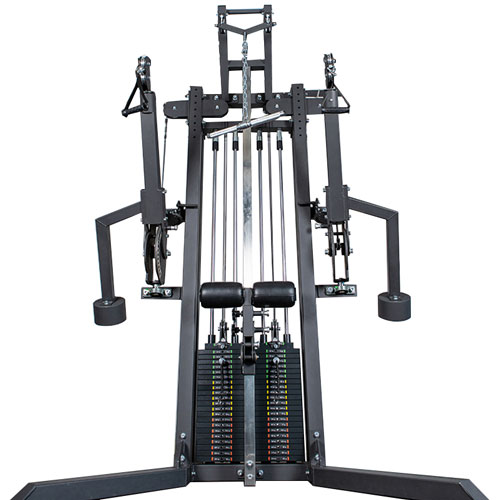
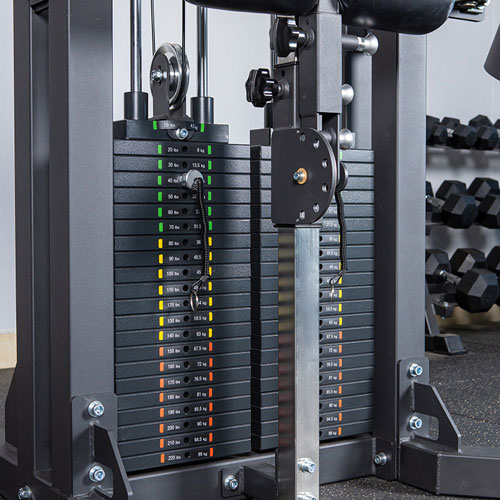
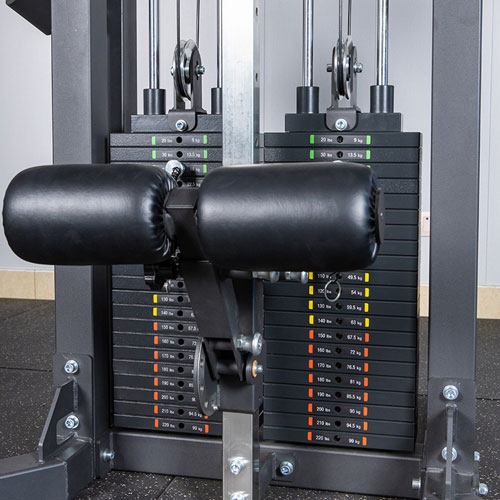
The 100kg stacked weight, 5kg per plate configuration offers a sweet spot for 80% of gym populations. Five-kilogram increments allow small enough jumps for lateral raises and rear delt flyes (where a 10kg increase would be too aggressive) while still providing enough total resistance for one-arm rows or cable pull-throughs. The stack construction uses cast iron plates with bronze bushings—a combination that slides quietly on the guide rods without the “clanking” sound typical of cheap steel-on-steel stacks.

For advanced athletes needing more than 100 kg per side, the machine’s frame accepts additional 5 kg add-on plates that sit on top of the stack (up to a 150 kg total, tested for structural integrity). The manufacturer offers these as an optional upgrade. The weight selector pin is machined from stainless steel with a captive ball bearing, preventing the pin from falling out during explosive movements—a common nuisance on lower-end crossovers where the pin vibrates loose during high-rep sets.

Weight Stack Specifications per Side
ParameterStandard ConfigurationOptional Upgrade
Total stack weight100 kg150 kg (add‑on plates)
Increment per plate5 kg5 kg (same increment)
Plate materialCast iron with bronze bushingsSame
Selector pin typeStainless steel, captive ball bearingSame

Two-Stage Belt+Chain Transmission: Why Smoothness Matters for Cable Crossovers

The chain system with belt+chain two-stage transmission is often misunderstood. Many buyers assume a direct chain drive is more durable—but for dual-cable machines, the opposite is true. Here’s the mechanism: the belt (first stage) connects the weight stack to an intermediate jackshaft. Because belts stretch slightly under load, they absorb the shock when a user releases the handle at the top of a flye (common when fatigued). That shock would otherwise travel directly to the chain and sprockets, causing premature wear and a “clunk” feeling at the start of each rep.

The chain (second stage) then drives the pulleys near the cable exit points, where wear is highest. This hybrid design means the belt takes the abuse from dynamic loading, while the chain handles rotational torque. The result: increase and decrease of resistance are smooth and natural, without the step-change feeling of a full-chain system. Users report that the eccentric (lowering) phase feels particularly controlled—the belt’s natural damping prevents the weight stack from dropping too quickly, which protects the shoulder joints during slow negative flyes.

Anti-Skid Durability: Beyond Surface Texture

The mention that the transmission design makes the anti-skid more durable refers to the footplate and handle materials, not just the pulleys. On this machine, the standing platforms are laser-cut from 4 mm diamond-plate steel, welded directly to the 75×75 mm base frame. Unlike bolt-on rubber mats (which peel off after a year of cleaning chemicals), diamond plate retains its grip even when wet with sweat or cleaning solution. The handles use a dual-layer grip: a nylon sleeve over a knurled aluminum core, which prevents the outer layer from spinning during heavy rows. This is a common failure point on cheaper crossovers where the grip rotates independently of the cable.

Adjustable Leg Press Attachment: Converting the Crossover into a Lower-Body Station

One of the most underrated features of this design is the adjustable leg press attachment. Most cable crossovers are strictly upper-body machines, but this unit includes a sliding seat carriage and footplate that transforms the center of the frame into a horizontal leg press. The adjustment mechanism uses the same pop-pin system as the upper arms, allowing the seat to lock at 6 different distances from the footplate. For gyms with limited floor space, this eliminates the need for a separate leg press machine—saving roughly 2.5 square meters of real estate.

From a biomechanics standpoint, the leg press attachment changes the resistance curve because you are pushing against the weight stacks via a 1:1 cable ratio (no mechanical disadvantage). That means a 100 kg stack feels like 100 kg of resistance at the footplate—more intense than many standalone leg press machines that use 2:1 leverage ratios to reduce the felt load. The footplate itself is 35 cm wide with a 10° upward tilt, accommodating both narrow and wide stances for quad vs. glute emphasis. Users over 190 cm height should verify that the seat track length (standard 80 cm) allows full knee extension without hitting the rear stop.

Leg Press Attachment Specifications
FeatureDetail
Seat adjustment positions6 locking positions (45 cm to 95 cm from footplate)
Footplate dimensions35 cm (W) × 25 cm (H), 10° upward tilt
Resistance ratio1:1 (direct cable drive)
Maximum user weight (seat)150 kg tested, steel carriage with roller bearings

Structural Integration: How the 75×75×3 Frame Supports Dual Functionality

A cable crossover with a leg press attachment imposes unique stress patterns. During a standing flye, the load is lateral—pulling the uprights outward. During a leg press, the load is horizontal—pushing the base frame apart. The 75×75×3 mm tube resists both vectors because the wall thickness creates a high polar moment of inertia. In practical terms, the machine does not “walk” across the floor during leg presses (common with lighter frames), and the uprights do not bow inward during heavy flyes.

The welds connecting the rear stabilizer to the main columns use a double-pass MIG process with visible penetration beads. For facilities that plan to move the machine (e.g., seasonal studio reconfigurations), the bolt-together design allows disassembly into 6 major components: two uprights with stacks, one base frame, one leg press carriage, and two adjustable arms. Each component weighs under 70 kg, manageable for two technicians. The included hardware uses grade 8.8 zinc-plated bolts, which resist corrosion for up to 5 years in indoor gym environments.

OEM and Customization: Building a Branded Cable Crossover

For gym franchises or equipment resellers, the Customized Logo and OEM options extend beyond a simple sticker. The manufacturer offers laser etching on the weight stack shrouds (upper and lower), embroidered logos on the seat and back pads, and custom anodizing of the aluminum pulley wheels. The lead time for OEM samples is 7–15 work days, which includes producing a single unit with your logo placement and powder coat color (standard black or any RAL code with minimum order quantity).

Three OEM details worth specifying in your inquiry: First, the instructional placard can be replaced with your brand’s exercise library (vector files required). Second, the weight selector pin can be engraved with your gym’s name. Third, the rubber feet under the base frame can be color-matched to your brand palette (an extra $12 per machine in tooling). These customizations raise the perceived value of the machine by 20–30% for boutique studios where equipment aesthetics matter as much as function.

Shipping and Assembly: What the Package Includes

The Polybag-Paper Carton-Wooden Pallet packaging is designed for LCL (less than container load) sea freight. Each steel component is wrapped in a moisture-proof polybag, then placed in a 5-ply corrugated carton with EPS foam inserts. The cartons are strapped to a heat-treated wooden pallet (ISPM‑15 compliant) with corner guards. For a machine weighing 204 kg (without weight stacks; stacks add another 100 kg per side when fully loaded), the pallet includes a tilt indicator—if the indicator turns red during transit, you know the machine was mishandled, which helps with freight claims.

Assembly requires 2–3 hours for two people using the included tools (hex keys, open-end wrenches, and a torque wrench for the leg press carriage bolts). The manual includes QR codes linking to video instructions for each major step: mounting the uprights to the base, installing the weight stacks (slide plates onto guide rods in descending order), attaching the adjustable arms, and configuring the leg press seat. The most common assembly mistake is reversing the left and right guide rods—the manual includes a dimension diagram to prevent this, as the top pulley brackets are side-specific.

Product FAQ

Specification CategoryTechnical Details
Frame Material75×75 mm steel tube, 3 mm wall thickness (structural grade, double-pass MIG welds)
Weight Stack (per side)100 kg standard (20 plates × 5 kg), cast iron with bronze bushings; optional 150 kg upgrade
Transmission SystemTwo‑stage: belt (first stage, shock absorption) + chain (second stage, high‑wear zones)
Adjustable Arm Travel180° rotation, 11–15 locking positions with degree markings; spring‑loaded pop pin
Leg Press AttachmentSliding seat with 6 positions (45‑95 cm from footplate); 35 cm diamond‑plate footplate, 10° tilt
Standing Platform4 mm diamond‑plate steel, welded to base frame
Handle Grip TypeDual‑layer: nylon sleeve over knurled aluminum core (anti‑spin design)
Color (Standard)Black textured powder coat (RAL codes available for OEM orders)
PackagingPolybag + 5‑ply paper carton + ISPM‑15 wooden pallet with tilt indicator
Place of OriginShandong, China
Sample Lead Time7–15 work days (OEM samples with custom logo)
Port of LoadingQingdao
Disassembled Weight (for shipping)Components under 70 kg each; total 204 kg (frame only, stacks shipped separately)

Customize Your Brand

Format: +[country code][number] (e.g. +1234567890)