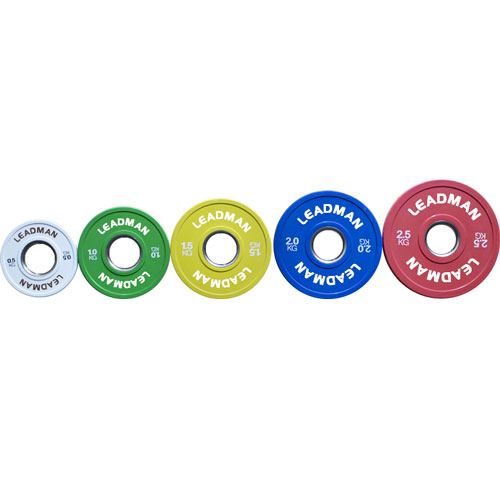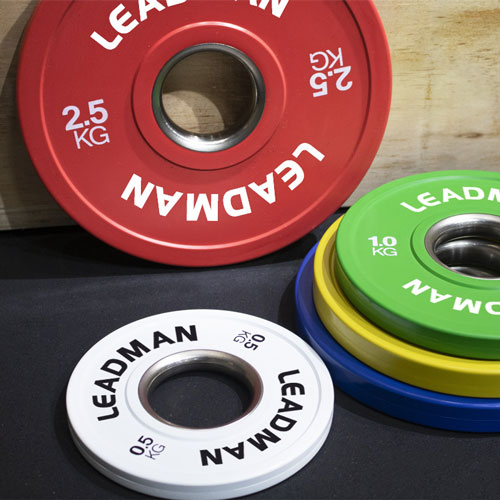
Change plates solve a specific problem in progressive strength training: the jump between standard weight increments is often too large. A lifter who completes 8 reps with 50kg may need 52.5kg, not 55kg. This rubber-coated change plate set, ranging from 0.5kg to 5kg, fills those gaps with 0.5kg resolution. The stainless steel collar insert distinguishes these plates from fully rubber-coated alternatives, which often develop slop around the barbell sleeve over time.
The combination of cast iron core with rubber coating addresses two facility concerns: floor protection and noise reduction. During deadlift warm-ups or dumbbell change-outs, dropped plates impact rubber flooring differently than bare iron. The rubber layer absorbs shock, reducing subfloor wear and noise transmission to neighboring spaces. The IWF standard diameter ensures compatibility with competition barbell sleeves and change plate loading order protocols.
Standard change plates use cast iron or rubber-only center holes. Cast iron corrodes when exposed to sweat and humidity. Rubber-only collars compress and deform, creating loose fit after repeated use. This plate's stainless steel collar insert solves both problems. Stainless resists the galvanic corrosion that occurs when iron plates contact chrome-plated barbell sleeves. The steel-on-steel interface maintains consistent friction, preventing the plate from rattling during dynamic lifts like Olympic pulls.
For commercial facilities, the stainless collar also reduces barbell sleeve wear. Rubber-coated plates without steel inserts often trap grit between the rubber and the bar, acting as an abrasive. The smooth stainless surface wipes clean easily and presents no grit-trapping texture. The clear customizable logo application appears on the rubber exterior, visible during rack storage and plate selection.
| Weight | Core Material | Collar Type | Finish |
|---|---|---|---|
| 0.5 kg | Cast iron | Stainless steel | Rubber coated |
| 1.0 kg | Cast iron | Stainless steel | Rubber coated |
| 1.5 kg | Cast iron | Stainless steel | Rubber coated |
| 2.0 kg | Cast iron | Stainless steel | Rubber coated |
| 2.5 kg | Cast iron | Stainless steel | Rubber coated |
| 5.0 kg | Cast iron | Stainless steel | Rubber coated |
Not all rubber coatings are equal. Low-quality change plates use recycled rubber that off-gasses volatile organic compounds, creating gym odor problems in enclosed spaces. This plate uses virgin rubber compound formulated for impact absorption without chemical smell. The smooth finish look outside indicates precise molding, not the rough texture of recycled rubber. For facility managers, this means less rubber dust shed onto flooring and barbell sleeves.
The rubber coating extends around the plate perimeter but leaves the stainless steel collar exposed. This design choice is intentional. Fully rubber-coated plates often develop rubber roll-back at the collar edge, creating uneven loading surfaces. The exposed stainless collar ensures consistent plate-to-plate contact when stacking multiple change plates on the barbell sleeve.
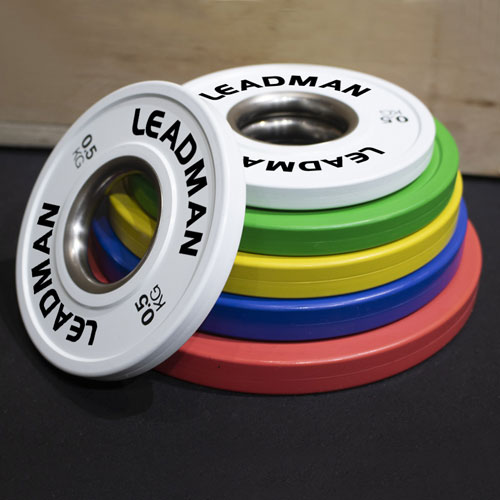
The available colors—black, grey, green, yellow, blue, and red—serve functional purposes beyond aesthetics. Facilities can implement color-weight schemes matching IWF competition standards (e.g., green for 10kg, yellow for 15kg) though change plates typically follow facility-specific systems. The customized logo option applies to the rubber face, visible when plates are racked vertically or stacked horizontally.
For multi-location gyms, color coding can indicate plate assignment to specific training zones or facility brands. A hotel gym might use black plates for neutral aesthetics, while a high-intensity group training facility might use bright red and yellow for visual energy. The customization extends to logo placement, allowing franchise locations to display their own branding on the rubber surface.
| Parameter | Detail | Commercial Impact |
|---|---|---|
| Place of Origin | Shandong, China | Established manufacturing region for iron casting |
| Sample Time | 7-15 work days | Allows quality verification before bulk orders |
| Package Type | Polybag → Paper carton → Wooden pallet | Tiered protection for sea freight consolidation |
| Gender/Application | Unisex / Universal | Suitable for all training populations |
| Usage | Weightlifting exercise | Olympic lifting, powerlifting, general strength |
The IWF standard diameter specification means the stainless steel collar fits Olympic barbell sleeves with standard tolerances. Specifically, this accommodates 50mm sleeves with a slight clearance for thermal expansion and coating variations. The fit should be snug enough to prevent wobble but loose enough for plate changes during timed workouts. For facilities using competition barbells with tighter sleeve tolerances, the stainless collar provides consistent fit across temperature and humidity variations.
Change plates are typically loaded closest to the barbell collar, before larger plates. This loading order ensures that the barbell's sleeve markings remain visible and that the change plates don't shift during lifts. The rubber coating on these plates creates a friction interface between change plates and larger iron plates, reducing the likelihood of plate spin during unracked barbell movements.
In a high-turnover commercial gym, change plates see more handling cycles than any other weight plate. They are constantly added, removed, and reracked. The failure mode for standard change plates is usually the center hole: cast iron corrodes and binds, or rubber deforms. The stainless steel collar extends service life by eliminating both failure paths. Based on material properties, these plates should outlast fully rubber-coated alternatives by 3-5 times in similar usage environments.
The polybag-paper carton-wooden pallet packaging indicates the manufacturer understands sea freight requirements. The polybag protects individual plates from moisture during container transit. The paper carton provides stacking stability. The wooden pallet enables forklift handling at port of entry. For buyers consolidating orders from multiple suppliers, this packaging tiering reduces repackaging time at distribution centers.
For facilities implementing change plate sets, the 0.5kg to 5kg range covers typical micro-loading needs. A complete set might include pairs of 0.5kg, 1kg, 1.5kg, 2kg, 2.5kg, and 5kg plates, allowing any increment between 0.5kg and 10kg per side. The clear customizable logo application method (likely pad printing or molded relief) should withstand regular cleaning with gym-grade disinfectants without fading or peeling.
| Specification Category | Technical Details |
|---|---|
| Place of Origin | Shandong, China |
| Product Type | Change Plate (micro-loading weight plates) |
| Brand Name | Leadman |
| Material Composition | Rubber coating + cast iron core + stainless steel collar |
| Available Weights | 0.5kg, 1.0kg, 1.5kg, 2.0kg, 2.5kg, 5.0kg |
| Diameter Standard | IWF standard (fits 50mm Olympic barbell sleeves) |
| Color Options | Black, grey, green, yellow, blue, red |
| Logo Customization | Customized logo available (pad print or molded) |
| Application | Universal / Weightlifting exercise |
| Gender | Unisex |
| Sample Lead Time | 7-15 work days |
| Package Type | Polybag → Paper carton → Wooden pallet |
| OEM / OEM Capability | Customized logo and colors available |