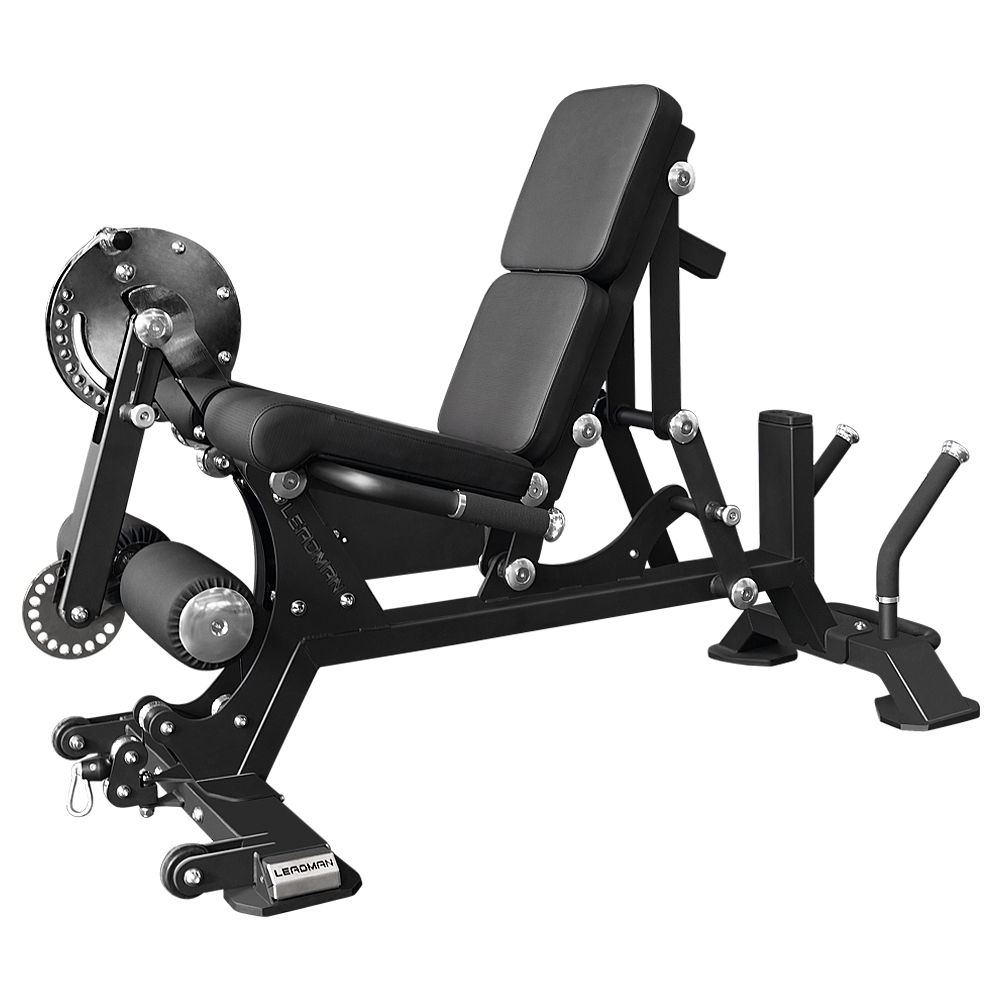
The modern strength training landscape demands equipment that transcends basic functionality, evolving into a precision instrument capable of addressing biomechanical nuance, training variety, and long-term durability. The conventional approach to lower body training often relies on free-weight compounds—squats, lunges, deadlifts—which, while foundational, fail to provide the isolated tension curve necessary for targeted quadriceps or hamstring hypertrophy. This is where a purpose-built leg extension machine transitions from a luxury to a cornerstone of any serious facility. The core engineering challenge has always been managing the resistance profile: a traditional cam-based system can create torque curve mismatches, leaving the lifter with a "dead spot" at peak contraction. To resolve this, the latest evolution in selectorized equipment utilizes a variable-radius cam with a specifically calibrated eccentric arc, matching the natural ascending strength curve of the knee extensors. This mechanism ensures that the resistance feels "heavier" at the fully extended lockout, where the quadriceps are mechanically strongest, and lighter during the initial stretch phase, protecting the patellar tendon. This design philosophy not only enhances muscle fiber recruitment across the entire rectus femoris, vastus lateralis, and vastus medialis but also significantly reduces shear stress on the anterior cruciate ligament, making the movement safer for both novice populations and advanced bodybuilders pushing to failure.
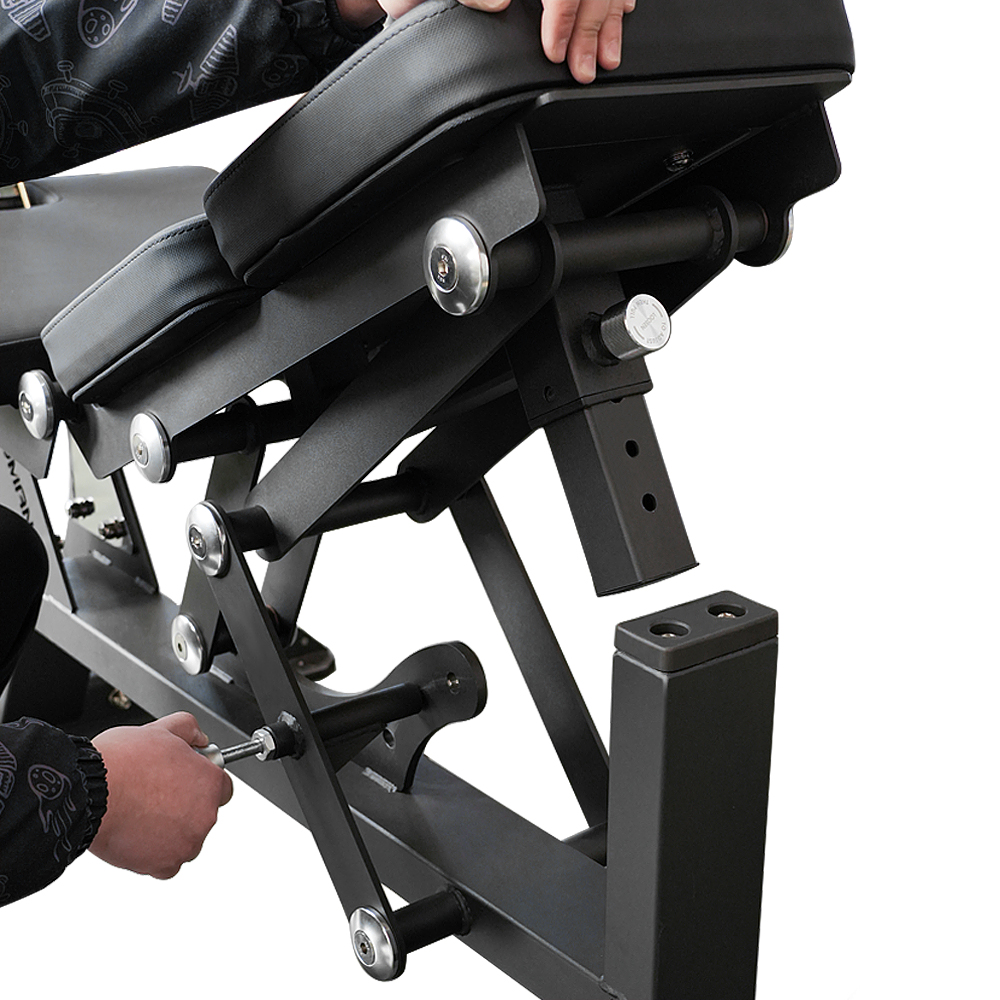
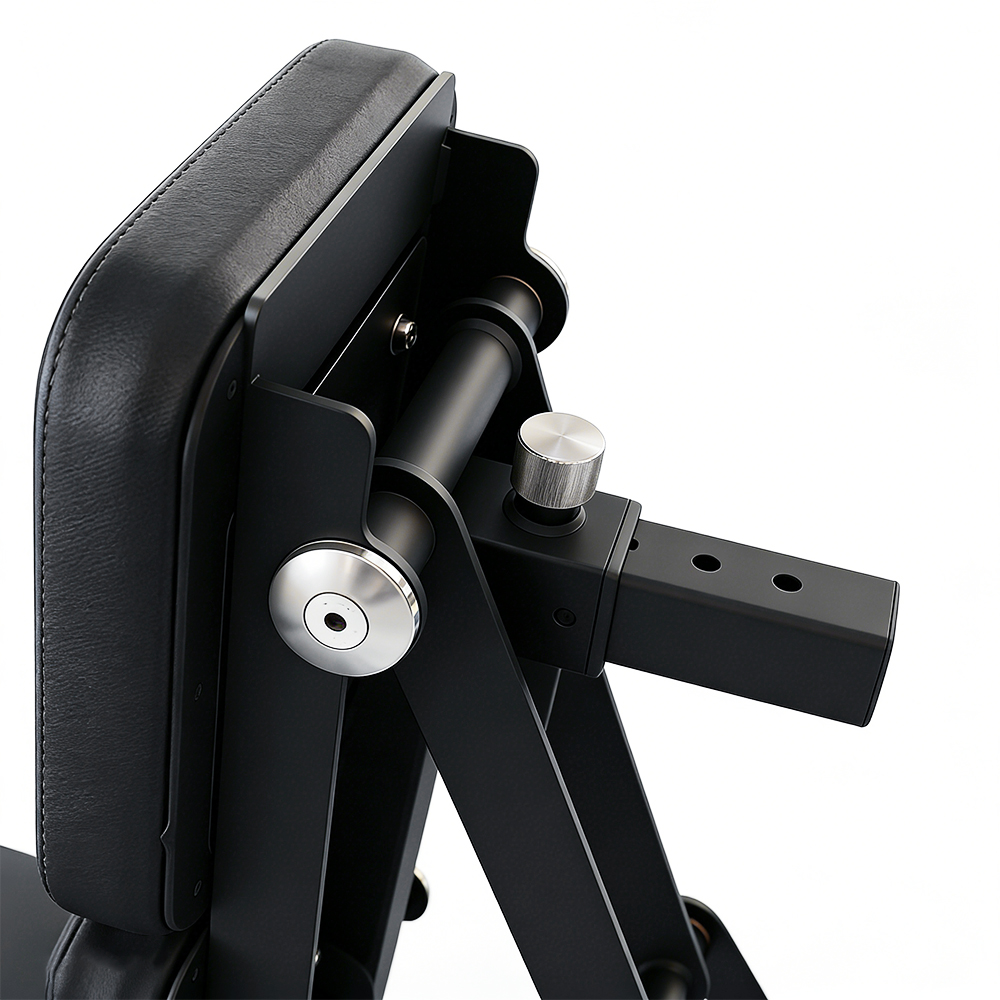
A static leg extension machine inherently disadvantages a significant percentage of users. Femur length, tibia length, and hip flexion mobility vary so considerably that a "one-size-fits-all" pivot point often forces the user to either lean back excessively (compensating with lumbar lordosis) or experience the pad placing pressure too high or low on the shin. The integration of a 4-level adjustable back pad, as seen in contemporary commercial units, directly addresses this morphological variance. By shifting the back pad's vertical position, the user's hip joint repositions relative to the machine's axis of rotation. This allows for a true hinge movement that respects the individual's unique skeletal geometry. For the athlete, this translates to a fuller range of motion (ROM) without the lower back lifting off the pad—a common compensation that converts a leg extension into a hip flexor- assisted partial rep. From a facility operations perspective, this adjustability is critical for insurance and liability; it reduces the chance of user error and improper loading that leads to strains. Furthermore, the inclusion of both seated leg extension, seated leg curl, and prone leg curl configurations within a single footprint leverages the concept of "agonist-antagonist supersets." A trainer can program a quad set immediately followed by a hamstring curl without relocating, increasing session density and metabolic stress. The prone leg curl position, specifically, offers a distinct advantage over the seated curl: it eliminates hip flexor involvement, allowing for pure knee flexion and targeting the semimembranosus and biceps femoris long head with greater isolation purity.
The interface between the machine and the human body is the touchpoint where perception of quality is solidified. Commercial-grade non-slip leather upholstery is no longer merely about comfort; it is a functional variable in force transfer. High-density, closed-cell foam wrapped in automotive-grade vinyl prevents the "bottoming out" sensation when load exceeds 150kg, while the non-slip texture ensures that during maximal eccentric contractions, the user’s torso remains fixed against the back pad rather than sliding upward. This stability is required to maintain the isometric contraction of the core stabilizers. Below the surface, the structural chassis typically relies on 11-gauge or thicker steel tubing, but the critical wear point is the pivot bushings. Bronze-impregnated or self-lubricating nylon bushings are superior to standard ball bearings in this application because they distribute load across a larger surface area, eliminating the "rocking" sensation that develops when bearings flatten over time. The result is a smooth, hydraulic-like feel that persists after thousands of cycles.
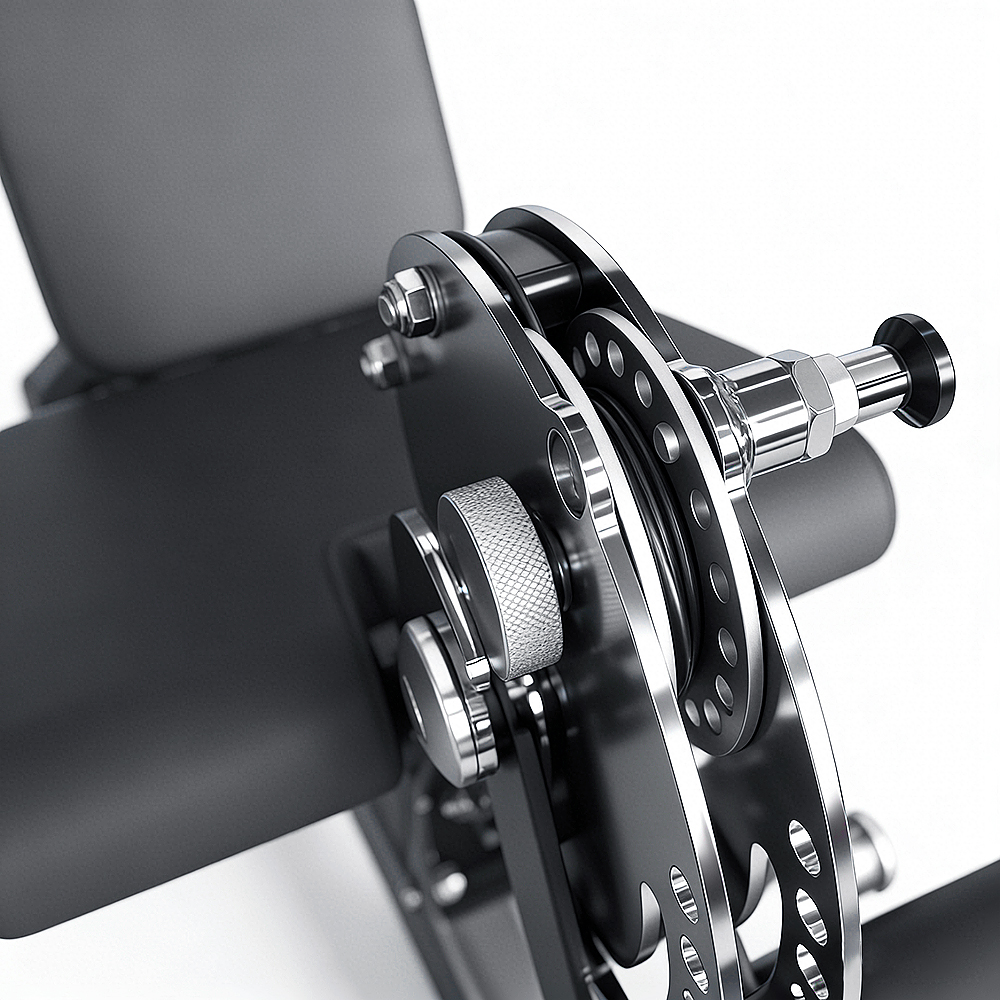
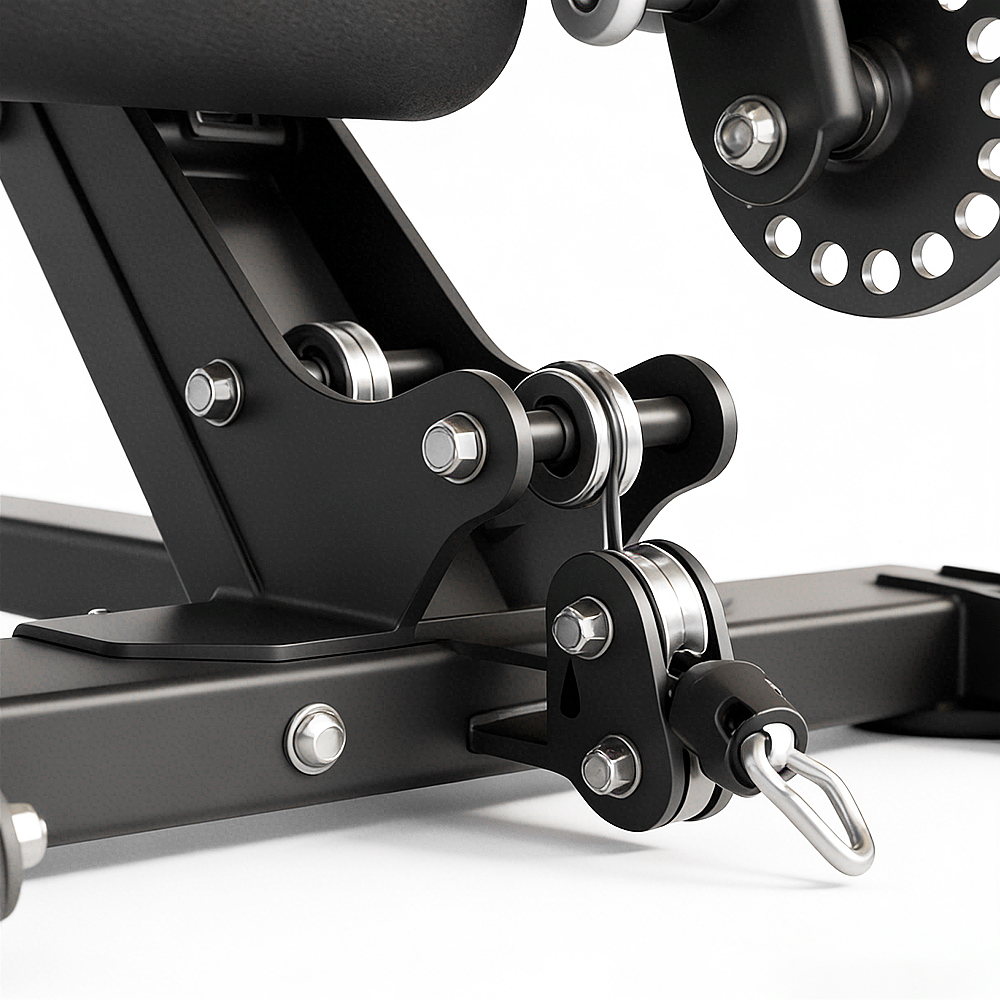
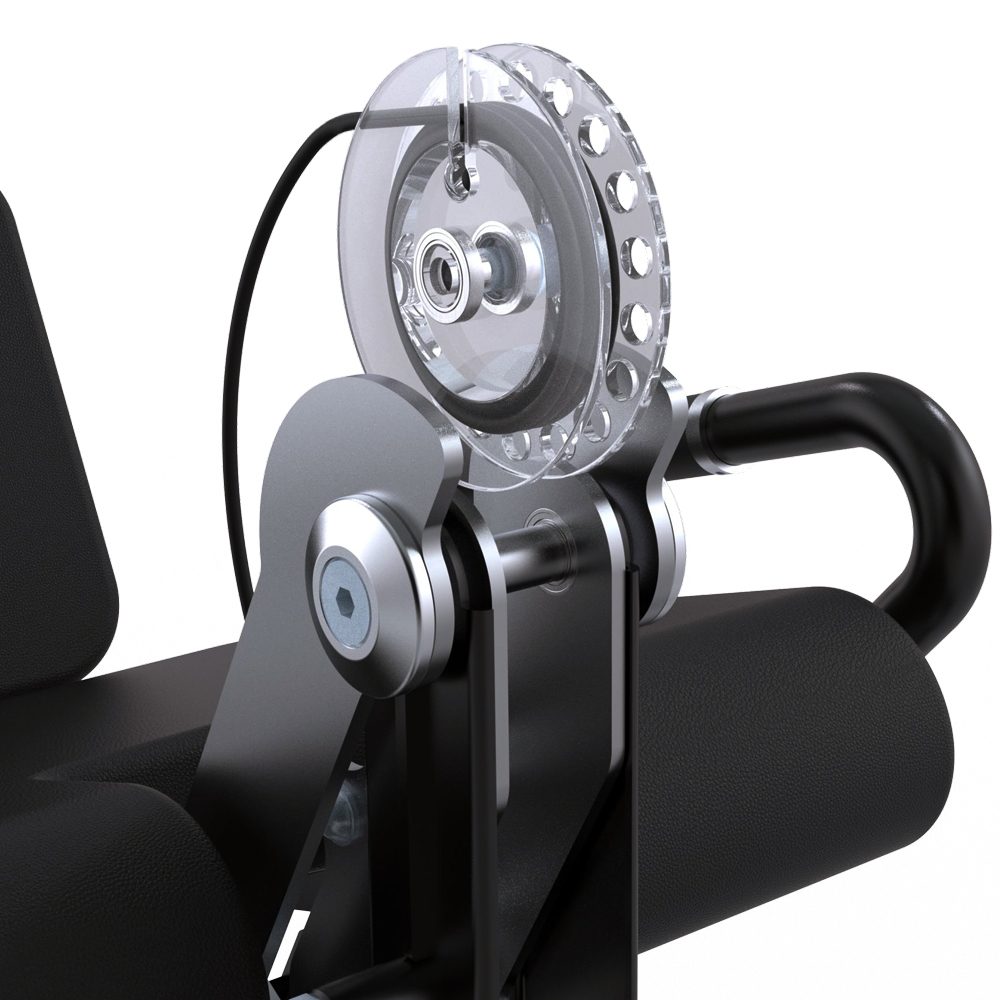
One of the highest friction points in a busy commercial gym is cable clutter. Loose cables present a tripping hazard, impede cleaning routes, and visually degrade the perceived value of the equipment. The implementation of a built-in cord reel storage system fundamentally changes the user experience and maintenance workflow. By automatically retracting the 1.2m adjustable steel cable into a protected housing, the system forces a "clean state" after every use. For the facility owner, this reduces the time staff spend re-racking and untangling cables, directly impacting operational efficiency. The precision gear-adjustable length mechanism allows the trainer to customize the starting cable pull point for different exercises (e.g., a shorter pull for cable crunches vs. a longer pull for standing hamstring curls). Furthermore, the adjustable cable angle (front or side installation) offers a rarely-considered logistical benefit. In a cramped fitness studio, being able to mount the cable pulley to the side of the weight stack rather than the front frees up critical floor space for the user's stance and the equipment's entry/exit path. This modularity allows the machine to function as both an isolated strength station and part of a larger functional trainer ecosystem.
The decision to purchase a leg extension machine often involves a complex calculation of ROI per square foot. Many operators reject dedicated single-function machines in favor of multi-gyms purely due to spatial constraints. To counter this, an advanced design philosophy incorporates transport wheels and a form factor that saves space by utilizing the existing weight stack area. This "saves space by utilizing the existing weight stack area" approach is an engineering realization that the weight stack itself is a vertical dead zone. By designing the leg extension attachment to slide onto or beside the existing 6-post or 4-post rack, the footprint is essentially shared. The transport wheels allow a single staff member to reposition the machine for deep cleaning or group class reconfiguration without heavy lifting equipment. From a safety compliance perspective, the low-profile base and weighted construction lower the center of gravity, preventing the unit from tipping during explosive movements or when a user dismounts incorrectly. This design also facilitates integration with a multifunctional squat stand, effectively creating a half-rack leg station that allows for seamless transitions between squatting and accessory leg work, maximizing the utility of a single floor mat area.
| Specification Category | Detail |
|---|---|
| Training Modes | 3-in-1 system (Seated Leg Extension / Seated Leg Curl / Prone Leg Curl) |
| Back Pad Adjustment | 4-level vertical adjustable positioning |
| Upholstery | Commercial-grade non-slip leather |
| Cable System | Built-in cord reel storage with integrated cable management |
| Cable Length | Adjustable steel cable (field-adjustable) |
| Cable Mounting Orientation | Dual configuration (front or side installation on weight stack) |
| Mobility | Integrated transport wheels for facility repositioning |
| Footprint Strategy | Space-saving design utilizing existing weight stack area |
| Compatibility | Integrates with multifunctional squat stand systems |
| Construction Material | Heavy-duty steel chassis (commercial grade) |
| Stability Features | Low-profile base engineered for low center of gravity |
| Pivot Mechanism | High-durability bushings (self-lubricating or bronze-impregnated type) |
| Target Environment | Commercial fitness facilities, CrossFit boxes, strength training studios |